Ross Reviews: In Bernstein & Berlioz, Robert Spano Presents Two Different Ways to Look at the World
Concert Reflections with Jon Ross
In this series from local music journalist Jon Ross, he reflects on the ASO’s Delta Classics Series with fresh insights into each concert.
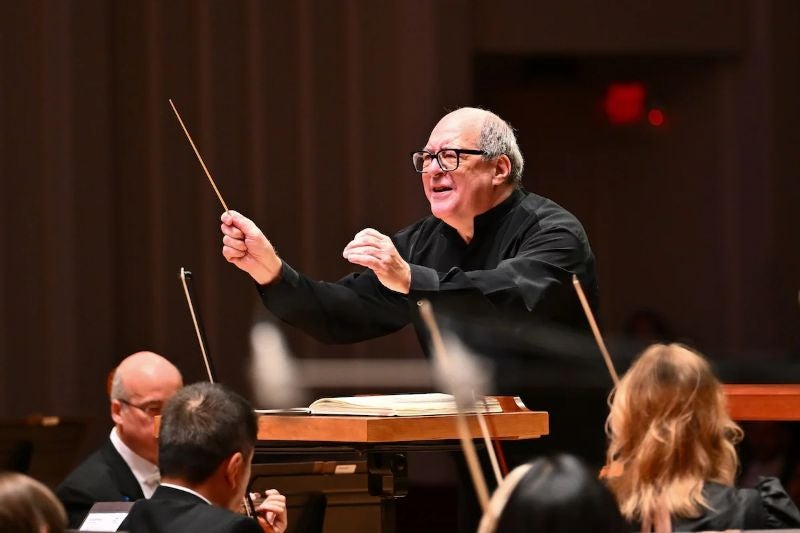
Always stay for the encore.
Thursday night at Symphony Hall, after the final notes of Bernstein’s Second Symphony, “Age of Anxiety,” guest pianist Conrad Tao brought out another piece of American music. His transcription of an Art Tatum “Somewhere Over the Rainbow” recording from 1953 put an unexpected and thoroughly delightful touch on a richly rewarding program.
I left the hall wondering if there was a deeper message in those voluble piano runs, those spiky extended harmonies, rich thickets of sound that never once obfuscated the melody. Was he telling us there’s hope for tomorrow? Or was it just a treat to hear Tao brilliantly excavate Tatum’s voice from the scratchy sonic depths? Regardless, I left the hall floating on a cloud.
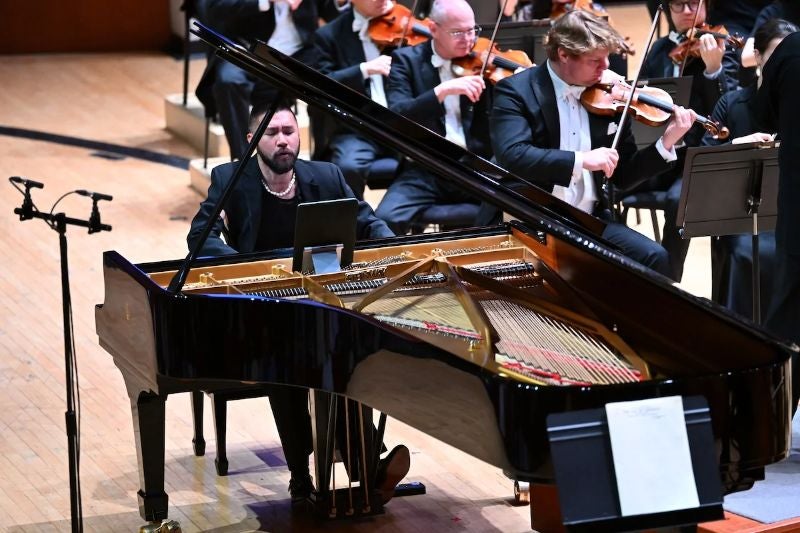
Tao came to town to interpret Bernstein’s Second Symphony, based on a book-length poem W.H. Auden published in 1947. The composer put music to Auden’s ideas soon after he published the book. Taking into account the entirety of the work, from the opening clarinet duet – a contemplative, sorrowful exchange between Jesse McCandless and Iván Valbuena – to the plucky jazz interlude toward the end of the piece, it’s easy to mistake it as a contemporary piece commenting on American life in 2026. Tao and the ASO brilliantly filled the symphony with heightened emotion – despair, confusion, agony, aggression, resignation.
To provide a contrast to the dense, beautiful, anxious symphony, Music Director Laureate Robert Spano brought out “Harold in Italy” by Hector Berlioz, featuring ASO Principal Viola Zhenwei Shi. (A repeat concert performance is scheduled for May 9 at 8 p.m. Tao will be on hand for a free Inside the Music discussion earlier in the day at 2 p.m.)
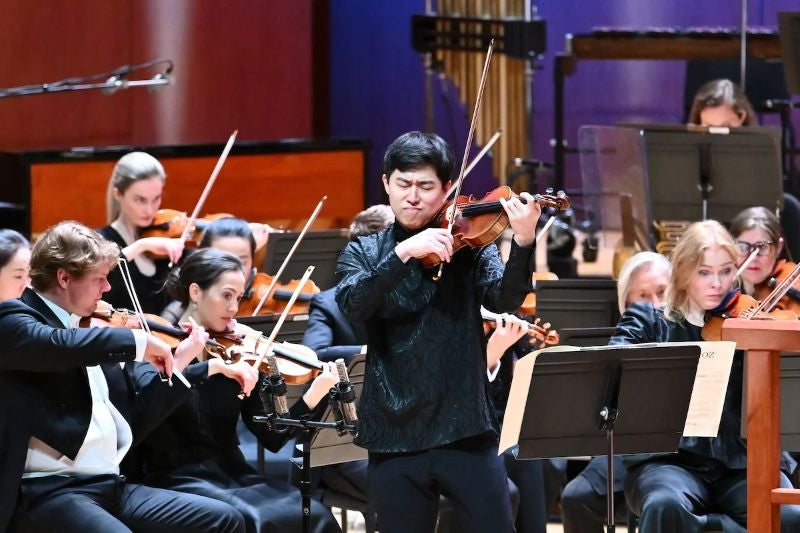
Thursday night ostensibly was a continued celebration of American music. But Berlioz made the overseas trip, and “Harold in Italy” is, well, about a young boy experiencing Italy. It turned out to be the perfect foil to Bernstein. The works are full of conflicting feelings about the world told through the voice of two musical protagonists, but they seemed to fall into two camps: Overall, Berlioz is optimistic, Bernstein is not. The gulf between these realities is a yawning gap.
On the first half of the program, Shi’s exquisite viola tone basked in the warm, sunny Berlioz harmonies, singing out with a carefree panache. The ASO infused even slightly ominous, dark passages with a bright light. The optimism that Shi’s tone conveyed seemed a model for how to go through the world. Maybe the sound just conjured up nostalgia, a longing for what once was before all this anxiety took over.
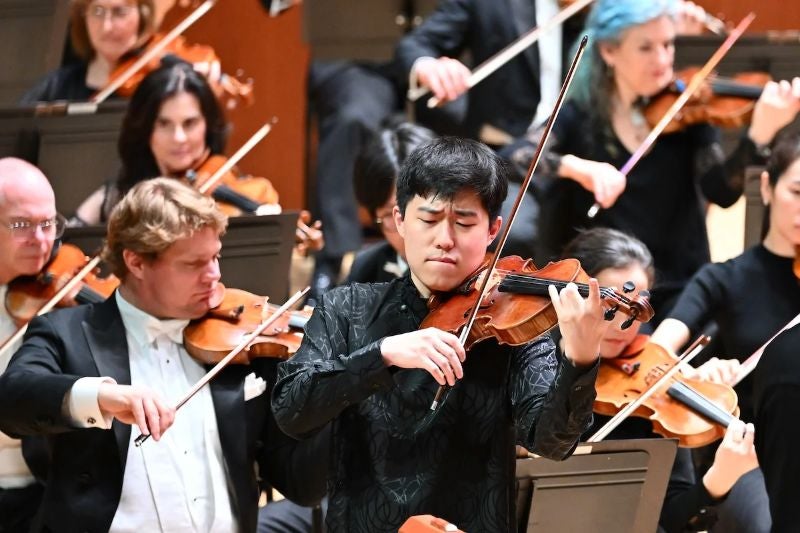
Bernstein’s Second Symphony leaves us with a question: What can American music tell us about our current time in history? Said another way, what do listeners want to hear that gives them the proper space to ruminate over living in America in 2026?
Stirring celebratory tunes and patriotism is not needed – although I admit to a swelling of pride and nostalgia upon hearing the soaring melody of John Williams’ 1996 Olympics theme during the ASO’s recent Piedmont Park performance. In his two concert series this season at Symphony Hall, Spano made a compelling case for lifting up Bernstein as a worthy interpreter of today’s … complexities. And in Thursday’s program, Spano gave us a new question: Can the sense of wonder and possibility felt by little boy Berlioz and snuffed out by Bernstein’s nervous narrator be unearthed once again?