Ross Reviews: Jerry Hou's Triumphant Return
Concert Reflections with Jon Ross
In this series from local music journalist Jon Ross, he reflects on the ASO’s Delta Classics Series with fresh insights into each concert.
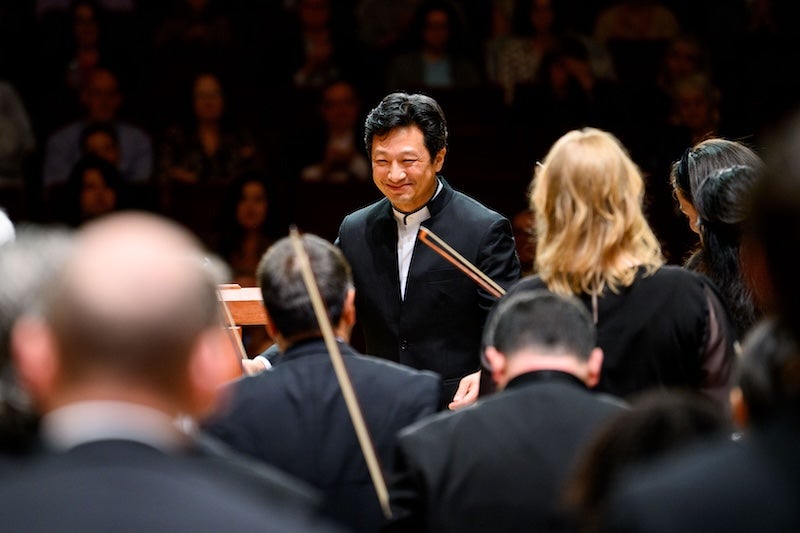
Jerry Hou, who served as an assistant conductor in Atlanta from 2020 to 2023, returned to Symphony Hall Thursday in his debut as guest conductor with the Atlanta Symphony Orchestra.
He brought with him a program that spotlighted an emerging talent in Nicky Sohn; Philip Glass, a champion of minimalism rarely heard on the Symphony Hall stage; and Russian master Sergei Rachmaninoff’s earliest symphony. The program repeats Friday night.
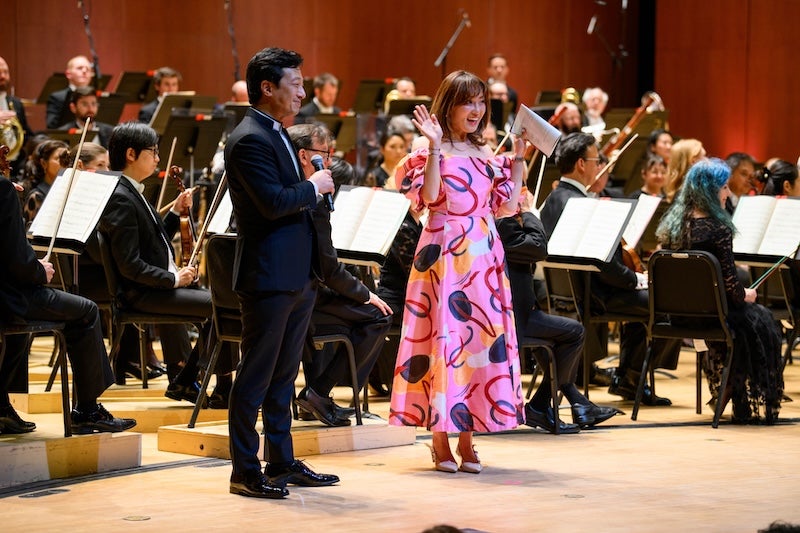
The concert opened with the world premiere of Sohn’s “A Tale of the Bunny and the Turtle,” which showcased her playful, inquisitive compositional mind. The work is a bit of personal archaeology; born in Korea, Sohn’s work melds the sounds of her heritage with the music she experienced after moving to the U.S. as a 16 year old. (Sohn first met Hou, who was teaching at Rice University, while pursuing her doctorate in 2019.) Sohn’s commission comes to the ASO by way of a first-place finish in the Atlanta Chamber Players’ “Rapido!” In the contest, contestants present mini chamber works written over a two-week period. The 20-minute “Bunny and Turtle” can feel a bit like smaller compositions pasted into a larger work, though it is packed with engaging and fun snippets of music. I look forward to hearing how Sohn’s compositional voice evolves.
You could call Philip Glass an old friend, too; the composer has a deep, if not frequent, history with the orchestra. In 1989, the ASO commissioned Glass, who turns 90 in January, to write a work for the orchestra and chorus. He delivered “Itaipu,” a programmatic “portrait of nature,” and the ASO recorded the work in 1993. The orchestra most recently performed a Glass composition in 2016, when violinist Robert McDuffie took on Violin Concerto No. 2. (Fun fact: That concert was the second appearance of Peter Oundjian, who has since become one of the ASO’s best and most frequent guest conductors.)
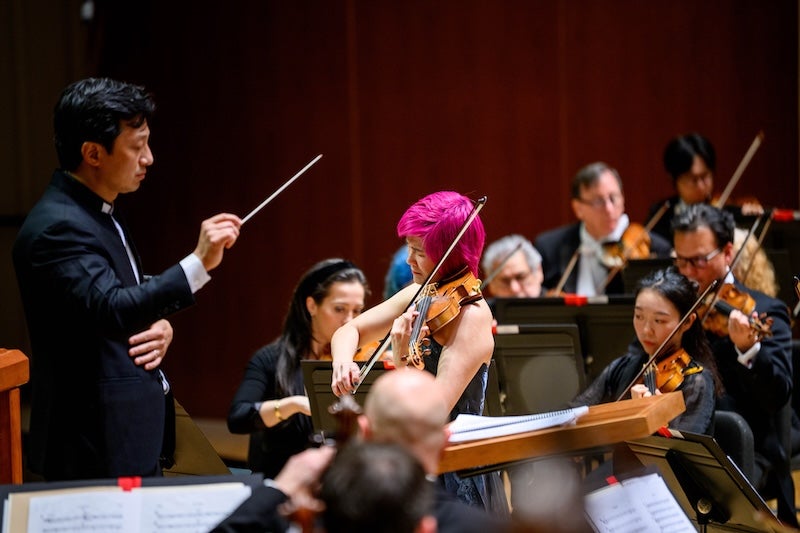
Thursday, the Glass concerto began with a shifting meter ensemble introduction before the violin started a constant, arpeggiated filigree, the orchestra shifting and teeming behind a steady flutter of notes. In this first movement, the exhilarating guest violinist Jennifer Koh pushed Hou’s tempo, blazing through a barrage of 16th notes, and the orchestra took a moment to truly settle in. By the second movement, both were making sublime music. As stereotypical Glassisms evolved in the ensemble, and Koh put on a bravura display, Hou made a compelling case for the ASO to explore Glass works more often.
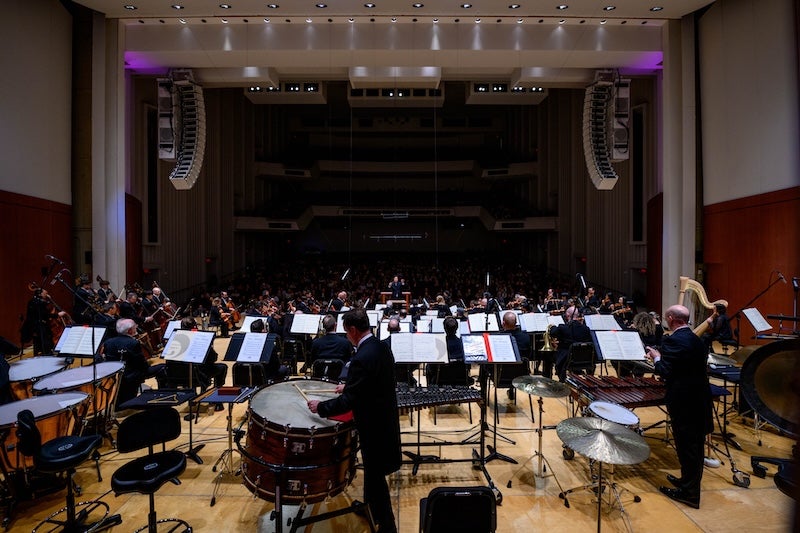
On the second half of the program, Rachmaninoff’s first symphony, which had only been performed in an ASO concert once before, proved a revelation and the perfect programmatic answer to Glass’ churning, propulsive concerto. This was the orchestra at its finest – thundering horns, lush stings, bombastic percussion. Though the orchestra sounded brilliant throughout, the thrilling final movement, full of the aforementioned bombastic percussion, should have cemented Hou’s place in the standard rotation of ASO guest conductors.
Think of Thursday as a mini preview of the orchestra’s America @ 250 celebration, which prominently features Music Director Laureate Robert Spano. In concerts beginning April 30 and May 7, he’ll also bring some Rachmaninoff (the third piano concerto) to the stage, along with a whole lot of Bernstein. Here’s hoping the fund, and the presence of guest conductors who bring thoughtful, forward-looking programming to the stage, continue exposing Atlanta audiences to new voices.