Ross Reviews: Stutzmann Brings Maximalist Bach to Symphony Hall
Concert Reflections with Jon Ross
In this series from local music journalist Jon Ross, he reflects on the ASO’s Delta Classics Series with fresh insights into each concert.
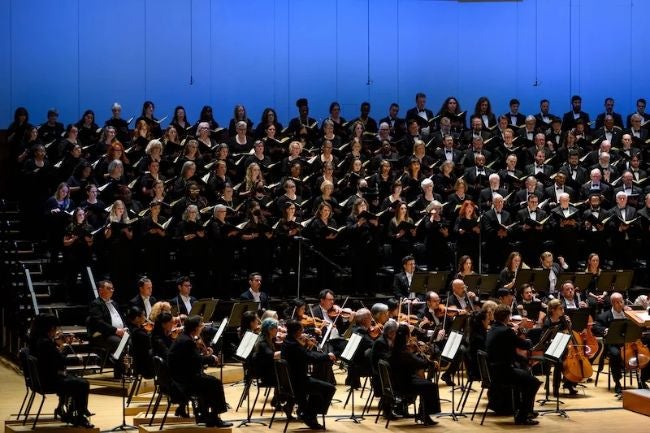
Did Bach want to go big? Did he yearn to hear his work on a truly monumental scale?
On Thursday at Symphony Hall, Music Director Nathalie Stutzmann confronted this question with her interpretation of the composer’s sprawling, 27-movement “Mass in B Minor.” Listed in the program as 114 minutes long (it perhaps felt a little more zippy than that timing would suggest), the Atlanta Symphony Orchestra and Chorus performed the work in two sections, with an intermission in between.
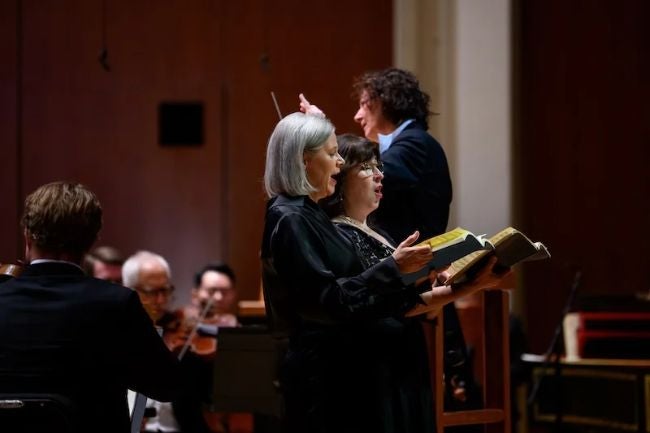
Yes, Stutzmann welcomed a full complement of choristers onto the stage alongside an array of guests: soprano Camilla Tilling, mezzo-soprano Meg Bragle (sitting in for the originally scheduled Fleur Barron), tenor Lunga Eric Hallam and bass-baritone Krešimir Stražanac; Chloé Sévère on keyboards; and Alice Coquart on continuo cello. The program repeats Saturday at 8 p.m. and Sunday at 3 p.m.
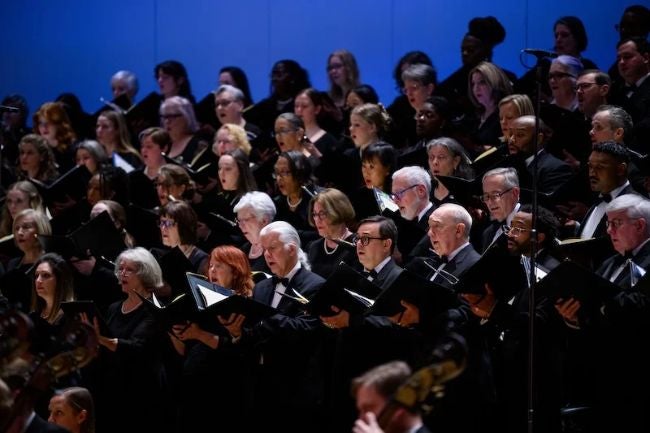
In the most recent Symphony Hall performance of Bach’s mass, under Music Director Laureate Robert Spano in 2013, the much more compact ASO Chamber Chorus took on the work. Thursday, hearing a larger choir in the middle of such an assemblage of musicians felt unique and notable. The larger ensemble brought more impact to Bach’s sanctified fortes and made the quiet, introspective passages even more affecting.
Stutzmann’s approach to Bach? Go big or go home.
With the larger ensembles also came a bit of an extreme approach to tempos. To close out the first half of the program, the usually sprightly “Cum Sancto Spiritu” positively sped along. And that was certainly not the only barn burner of the evening. Other passages seemed slow, with Stutzmann giving the music more time to develop, wringing emotion from each note. For the most part, the chorus met Stutzmann’s tempo, but it felt at times like her ideal tempos had yet to be realized.
Bach fanatics will no doubt quibble with tempos – maybe some movements felt fast, while the others were slower than expected – but those are merely interpretive differences. After all, Bach didn’t include tempo markings in the manuscript, so there’s wide latitude when it comes to the speed of the movement. As long as the orchestra, chorus and conductor are in harmony, and in service to the music, all should be fine. For the most part, this was the case. And I’m sure if I were to hear a conservative pacing of the piece tomorrow, it might feel overly slow.
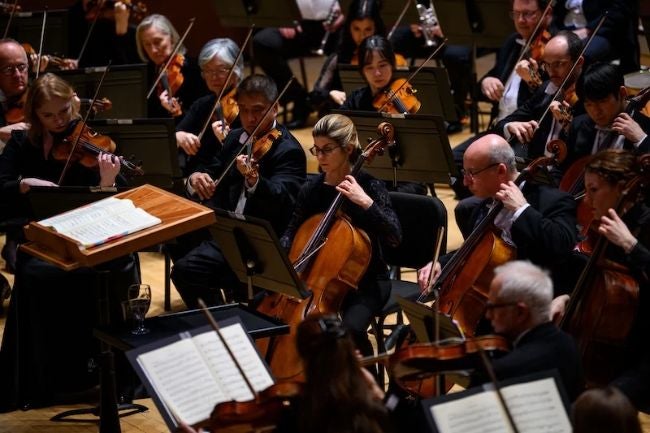
Throughout the program, Coquart’s continuo added new depth to a resonant bass section, seated in the midst of the ensemble, which provided a strong foundation for the soaring melodic vocal lines. The choir sings a significant portion of the work, but Bach also included stunningly moving passages for his soloists. Of all the solo vocal passages, Hallam’s turn, which came late in the program, stuck with me the most. These solos also turned a spotlight on the orchestra: Christina Smith on flute, Ryan Little on French horn, concertmaster David Coucheron and others paired up with the vocalists for intimate dialogues. Tilling and Bragle also coupled for exquisite duets, their voices expertly intertwined.
As an audience member, you see a program that captures your attention, buying a ticket in the hope of being inspired, of being in the room when something extraordinary happens. Hearing a work written long ago, even done well, can be uninspiring. But it’s nearly impossible not to have an opinion regarding unique interpretations. Bad, good, monumental or otherwise – these are concerts that provoke a visceral reaction. And that’s what going to see live music is all about.