Ross Reviews: Stutzmann Summons Hope in Tchaikovsky's Sixth Symphony
Concert Reflections with Jon Ross
In this series from local music journalist Jon Ross, he reflects on the ASO’s Delta Classics Series with fresh insights into each concert.
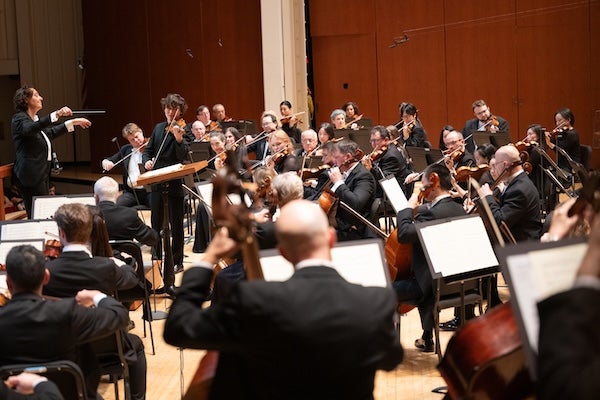
On certain special nights, orchestra, guest soloist and conductor align so well, create such memorable music that something like a 150-year-old Russian composition can become a contemporary commission written expressly for the ensemble. On Thursday night, Daniel Lozakovich, in his second trip to Atlanta, played Tchaikovsky’s Violin Concerto as if the composer had worked hand-in-hand with the 25-year-old Swedish violinist to develop the piece.
While the ASO hadn’t programmed the Tchaikovsky Violin Concerto since 2022, with Hilary Hahn in the guest artist role, the institution is extremely familiar with the work. Between 2016 and 2019, the ASO presented the concerto with Joshua Bell, Nikolaj Znaider and James Ehnes as soloists. While Stutzmann hadn’t performed the work in Atlanta, it’s been an object of intense recent study: she conducted the Violin Concerto earlier this month for her debut with the Royal Concertgebouw Orchestra, with Augustin Hadelich in the starring role.
It’s hard to judge, of course, but I’m willing to say I’d prefer hearing what I heard last night from Lozakovich versus any of the previous performances, even Stutzmann’s Amsterdam turn with Hadelich. (I’ve long held that Hadelich brought to Atlanta one of the best performances I have ever witnessed.) Stutzmann reprises the program Friday and Saturday at 8 p.m.
To borrow a trite phrase, Lozakovich played much of the piece like the world were on fire, like his violin could reverse the course of suffering. He also displayed the rich textures he can conjure from his instrument, performing the second movement as a solitary love song, sung on a moonlit night while wandering through the forest. Lozakovich was sure to create technical fireworks as well with expansive cadenzas where cascading double stops morphed into fleet-fingered passages, the violinist playing with Tchaikovsky’s hummable themes.
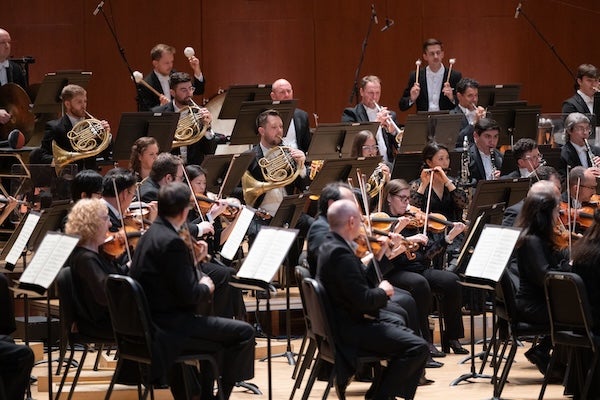
On the second half of the program, Stutzmann paired Tchaikovsky’s Concerto with the composer’s Sixth Symphony. Dubbed “Pathétique,” emotion bursts from the work. On Thursday, the ASO’s brilliant, stereophonic strings and earthy woodwinds started in the primordial murk, rising up slowly to create a multifaceted soundworld. Deep feeling propels the entire work, but the final movement, “Adagio lamentoso,” is the true heart of the piece. It begins with deep, resonant sorrow – the kind of lamentation that cuts straight to the soul – played Thursday by a string section that was all-in on filling Symphony Hall with the resonance of anguish and despair. Oddly enough, this display of hopelessness gave me hope; the heart of these deliberate, slow harmonies, which envelop the ears as a thick fog, contains a message of hope.
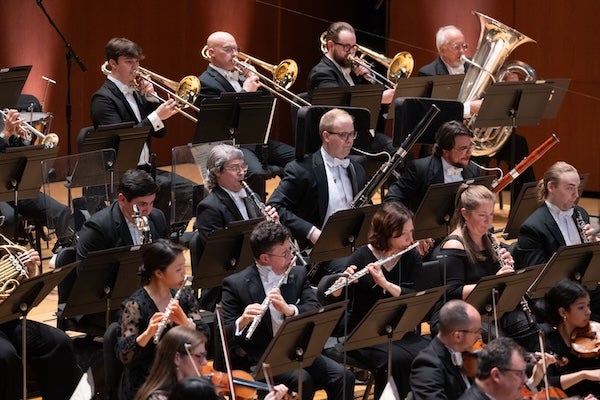
Tchaikovsky wrote the Sixth Symphony at the end of his life, and the program notes point out that many hear the composer’s preparation for death in that final movement. But does it sound like saying goodbye? Is he steeling himself, through his chosen avenue of self-expression, for what’s next? For me, the two works radiate emotion; they sound like a composer uniquely attuned to his feelings, an expert at translating sadness, deep sorrow and anger into music. In Tchaikovsky’s emotional writing, Stutzmann has a kindred spirit; her attention to shaping the emotionality of the orchestra is paying off in beautifully expressive and heartfelt performances.
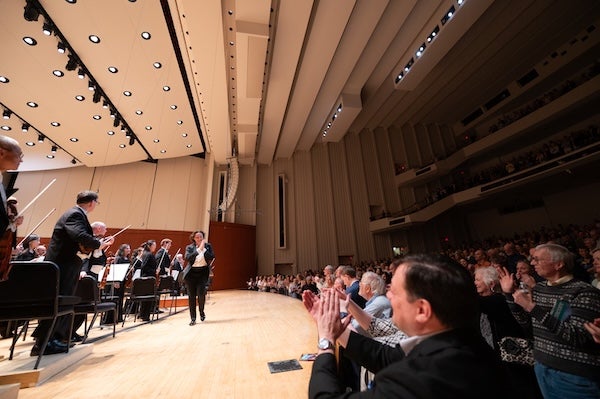
On the face of it, Stutzmann programmed two of Tchaikovsky’s can’t-miss pieces for the start of a two-week end to the 2025-2026 season. But with any well-trodden work, there’s danger in over familiarity. No worries here, as Stutzmann’s intense preparation, Lozakovich’s bravura performance and the ensemble’s engagement with the material worked together to create something truly magnificent. I’ve been worried about the ASO’s recent focus on mining the classical archives instead of being committed to new music. Thursday proves there might be as much value in looking back as there is in looking forward.