ASO’s Celebration of American Music Charts the Country’s Musical History and the Path Forward
Think of a stereotypical American piece of classical music. What do you hear? There might be a bit of jazz, a sprinkling of gospel or perhaps an Appalachian folk melody. Perhaps you’re thinking of a tonal composition filled with innovative rhythms. Odds are that there’s a tune-fulness to the music, a complete ear-worm of a melody.
That’s what Music Director Laureate Robert Spano imagines when he thinks of American classical music: a melting pot of sounds, an aural tapestry that incorporates the soundscapes of the country.
American classical music contains multitudes.
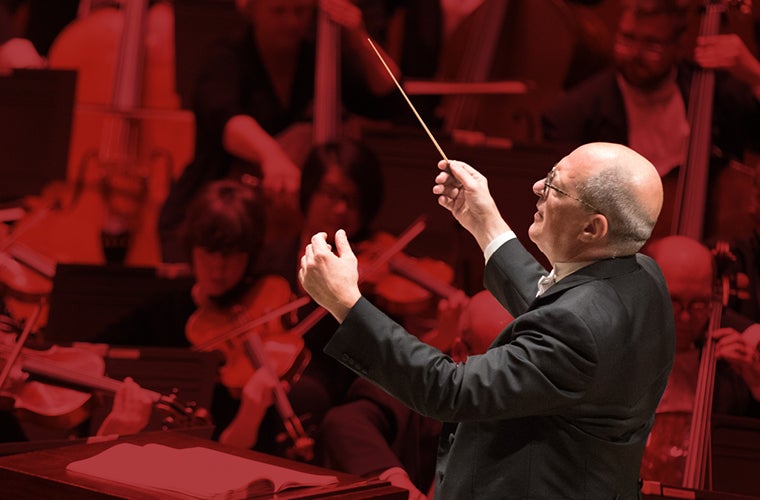
Spano returns to Symphony Hall at the end of April for two concerts celebrating this diverse American sound, presenting programs centered on Leonard Bernstein’s first two symphonies.
It’s all part of the Atlanta Symphony Orchestra’s America @ 250 celebration. Starting in late January, the ASO will spotlight six American programs in celebration of the 250th anniversary of the Declaration of Independence. During that span, five guest conductors, including former ASO resident conductor Jerry Hou, take the Symphony Hall stage.
The mini festival contains new works, including ASO commissions by Valerie Coleman and Rapido! winner Nicky Sohn, and compositions by jazz luminaries; the orchestra will present Duke Ellington’s“Three Black Kings” and Artie Shaw’s clarinet concerto. And a lot of Bernstein (conductor Teddy Abrams, in his ASO debut, leads the orchestra in Symphonic Dances from West Side Story.)
Is Bernstein a synecdoche for American classical music?
“No … but yes,” Spano said before highlighting what makes Bernstein’s symphonies sound American: a jazz trio section near the end of the second movement of his second symphony; his use of vernacular American music in a symphonic setting; and the mixed meter section, which creates “rhythmic vitality,” in the second movement of the Jeremiah symphony.
“Both pieces are absolute masterpieces that show that his compositional prowess was all the more impressive for being able to operate in so many arenas,” Spano said. ‘West Side Story’ is one of the greatest shows ever … and here are two pretty substantial and profound symphonic statements from the same composer.”
Bernstein was popular in his day, of course, but Spano noted that contemporary orchestral programs have been highlighting his work more and more. That might be due to a broadening of American music, an opening up beyond the serialism and chance works that seemed to define American music decades ago. This movement toward tonality mirrors the direction Spano has taken when programming American composers in Atlanta and elsewhere, including the cohort of musicians he gathered together during his time leading the ASO.
“I think certainly the generation of Atlanta School composers that we were featuring over a couple of decades reflects an aesthetic opening, that everything became viable,” he said. The school became Spano’s way of purposefully championing new music and composers from the United States, a legacy passed to him from former music director Robert Shaw.
But is the 250th anniversary of the United States a time for reflection, of taking stock of American musical history, or is it a chance to celebrate the possibilities to come?
For his part, Gaetan Le Divelec, the ASO’s Vice President of Artistic Planning, has been thinking about incorporating more American music into the orchestra’s programming since before his 2022 arrival in Atlanta.
“My feeling was that the United States as a whole, as a culture, was struggling with recognizing and celebrating its own musical heritage,” he said. “I came into this role thinking I want to try and change this, to get to a point where an American orchestra is a little bit less obsessed with European musical heritage and a little more focused on defining what is American classical music.”
Le Divelec said he thinks historically it has been difficult to generate enthusiasm about American classical music. Through the America @ 250 celebration, and increased American programming next season, he hopes to change that perspective. For him, it’s also about broadening the perceived definition of American music, breaking out of the two or three instantly recognizable composers and welcoming new, or unheralded, voices.
“There are some great classics that we need to celebrate, but we also need to make space for those strands of American culture that are not so readily recognized in classical music,” he said. “I think it’s important for anyone who is in a position of programming for a U.S. classical music organization. That needs to be part of the goal, to try to put American music heritage more at the forefront.”
Learn more about America @ 250 at aso.org/america250