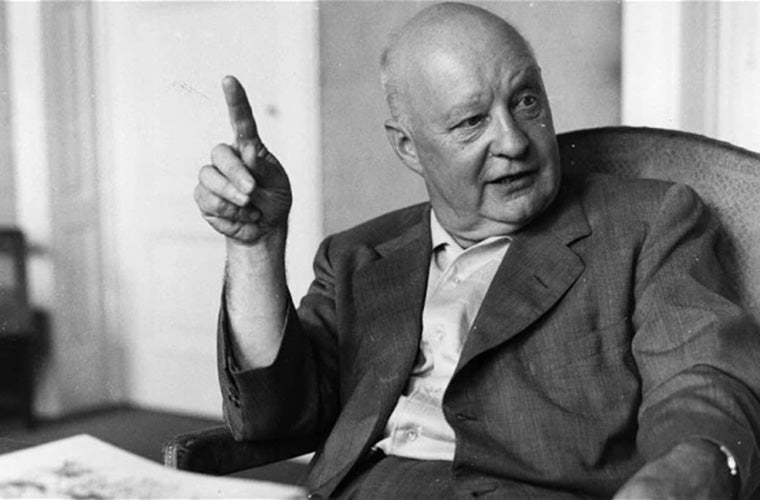
Paul Hindemith
1895 - 1963
Biography
Paul Hindemith (1895–1963) was one of the most versatile and influential figures in 20th-century music—a world-class violist, a profound theorist, and a prolific composer whose work defined the movement known as New Objectivity (Neue Sachlichkeit). Rejecting the over-saturated emotionalism of the late Romantic era, Hindemith sought to create music that was structurally rigorous, rhythmically driving, and fundamentally purposeful, famously championing the concept of Gebrauchsmusik, or "music for use," designed for the practical needs of performers and their communities.
Born in Hanau, Germany, Hindemith was a child prodigy who supported his family by playing in dance bands and musical comedies before becoming the concertmaster of the Frankfurt Opera at age nineteen. This early, hands-on immersion in every corner of the musical world shaped his belief that a composer must be a craftsman first. By the 1920s, he had become the "enfant terrible" of the German avant-garde, known for his gritty, lean textures and motoric rhythms that echoed the mechanical energy of the modern age.
His most enduring orchestral masterpiece, the symphony Mathis der Maler (1934), marked a turning point in his life and style. Based on the life of the painter Matthias Grünewald, the work used powerful, folk-inspired themes and a grander, more lyrical architectural sense. However, its success drew the ire of the Nazi regime, who banned his music as "degenerate," eventually forcing Hindemith to emigrate to the United States. He settled in New Haven, Connecticut, where he joined the faculty of Yale University and became a legendary educator, mentoring a generation of American composers while producing major works like the Symphonic Metamorphosis of Themes by Carl Maria von Weber (1943).
In his final decades, Hindemith’s music achieved a monumental, almost neoclassical clarity, characterized by his unique harmonic system that sought to ground modern dissonance in the natural laws of acoustics. Whether writing for a solo instrument or a massive symphony orchestra, his scores are marked by an impeccable sense of counterpoint and a distinct, energetic "gallop." Today, Hindemith is remembered as a master craftsman who bridged the gap between the ancient traditions of Bach and the complexities of the modern world.
Featured Events
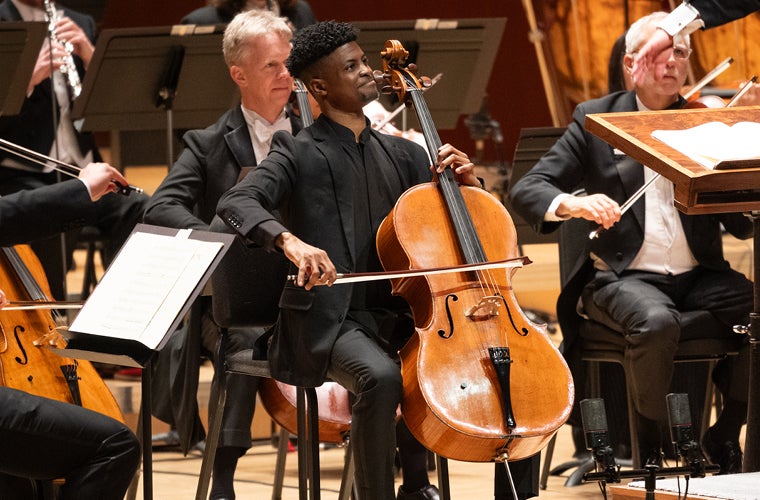
- Mathis der Maler (Matthias the Painter)Hindemith
- The Unanswered QuestionIves
- Andante CantabileTchaikovsky
- Variations on a Rococo ThemeTchaikovsky
- BacchanaleGriffes
- Nuages and Fêtes from NocturnesDebussy