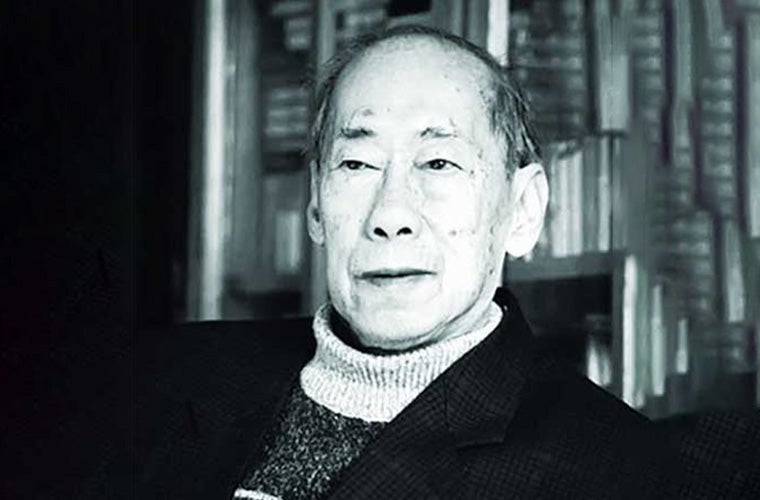
Li Huanzhi
1919 - 2000
Biography
A towering figure in 20th-century Chinese music, Li Huanzhi (1919–2000) was a highly influential classical composer, conductor, educator, and music theorist.
His life and creative output mirrored the turbulent historical transformation of modern China, serving as a vital bridge between traditional folk idioms and Western orchestral forms. Best known for his vibrant, festive compositions, Li dedicated his decades-long career to preserving regional sonic identities while institutionalizing music education on a grand scale.
Born in Hong Kong to a Taiwanese mother and an ancestral family from Fujian, Li was exposed early to an eclectic array of music, ranging from Christian church hymns to Cantonese and Fujianese folk styles. He began formalizing his musical passions in 1936 by entering the National Music College in Shanghai. As political tides shifted, he relocated to the wartime revolutionary base of Yan'an in 1938, where he joined the Music Department of the Lu Xun Arts College. It was there that he studied composition and conducting under the legendary Xian Xinghai (composer of the Yellow River Cantata), a mentorship that profoundly shaped his lifelong philosophy of merging regional Chinese materials with large-scale symphonic frameworks.
Li's crowning achievement came between 1955 and 1956 with the creation of the Spring Festival Suite. Its sparkling first movement, universally performed on its own as the "Spring Festival Overture", stands as an immortal cultural symbol of the Lunar New Year across the globe. Built upon the traditional Chinese pentatonic scale, the piece masterfully adapts the energetic yangge folk dance rhythms and authentic folk melodies of the Shanbei region in northern Shaanxi. The overture is so deeply woven into the fabric of global Chinese heritage that in 2007, it was selected to be broadcast into deep space aboard China's first lunar probe, Chang'e 1.
Beyond this seasonal masterpiece, Li's catalog spans a vast registry of symphonic poems, choral epics, film scores, and chamber configurations—including contributing to the classic ballet The White-Haired Girl. Following the founding of the People's Republic of China, he transitioned into an esteemed institutional leader. He served as the artistic director of the Central Ensemble of Songs and Dances, the director of the China National Traditional Orchestra, and was ultimately elected Chairman of the prestigious Chinese Musicians' Association in 1985. Li's legacy endures as a master orchestrator who amplified the heartbeat of local folk traditions onto the global symphonic stage.
Featured Events
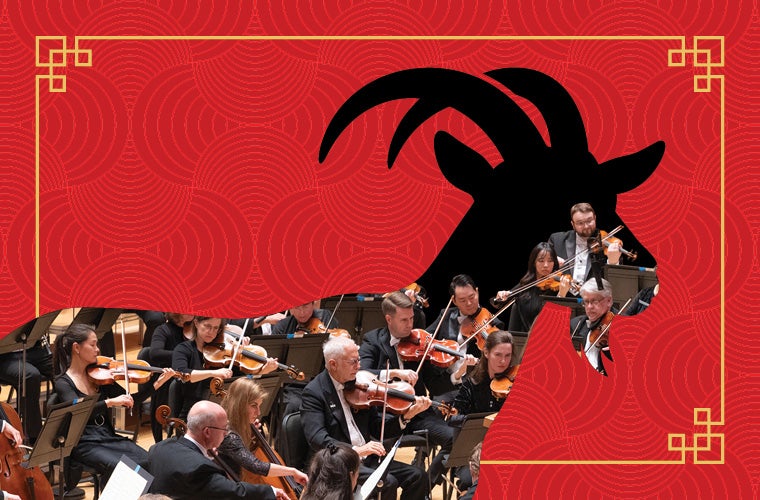
- Spring Festival OvertureH. Li
- Colorful Clouds Chasing the Moon (arr. Y. Suzuki)Traditional
- "Largo al factotum della città" from Il Barbiere di Siviglia (The Barber of Seville)Rossini
- San-ah (Mountain)Dong-Soo Shin
- New WorkAlice Hong
- The Butterfly Lovers' Violin ConcertoZ. He & Chen
- Happy SunriseY. Bao