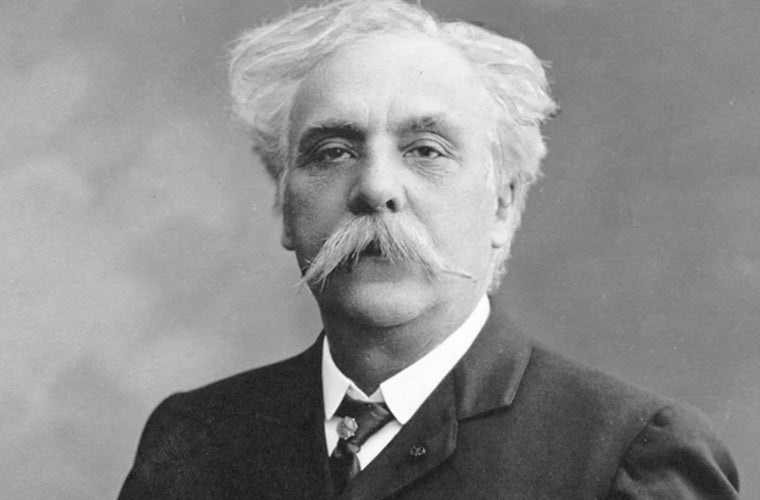
Gabriel Fauré
1845 - 1924
Biography
Gabriel Fauré (1845–1924) was a cornerstone of French music at the turn of the 20th century, a composer whose work bridged the end of Romanticism with the emerging modernism of the next generation. Known for his refined harmonies, subtle lyricism, and a quiet but profound emotional depth, Fauré created a uniquely French musical idiom that favored elegance and restraint over grandiosity.
Born in Pamiers in southern France, Fauré showed early musical talent and was sent at age nine to the École Niedermeyer in Paris to train as a church organist and choirmaster. His most significant mentor there was Camille Saint-Saëns, who introduced him to the contemporary music of Schumann, Liszt, and Wagner and became a lifelong friend and champion. Despite his talent, Fauré spent many years supporting himself through demanding posts as an organist—notably at the Église de la Madeleine—and as an inspector of provincial conservatories, which left him with only summer holidays to dedicate to composition.
Fauré’s public recognition arrived late, but it was substantial. In 1896, he was appointed professor of composition at the Paris Conservatoire, and in 1905, he became its director. As a teacher and administrator, he modernized the institution and mentored an extraordinary array of talent, including Maurice Ravel, Nadia Boulanger, and George Enescu. During these years, he produced his most celebrated works, including the Requiem (notable for its gentle, "lullaby-like" tone), the Pavane, and the orchestral suite Pelléas et Mélisande.
In his final two decades, Fauré grappled with increasing deafness and aural distortion, which caused music to sound painfully out of tune. Rather than ending his career, this "inner silence" led to an "Indian summer" of composition. His late works, such as the String Quartet and the Piano Trio, became more concentrated, abstract, and harmonically daring. By the time of his death in 1924, Fauré was honored with a state funeral as France's leading composer, remembered for a legacy of music that—in its mix of "sensuousness and serenity"—remains a quintessential voice of French culture.
Featured Events
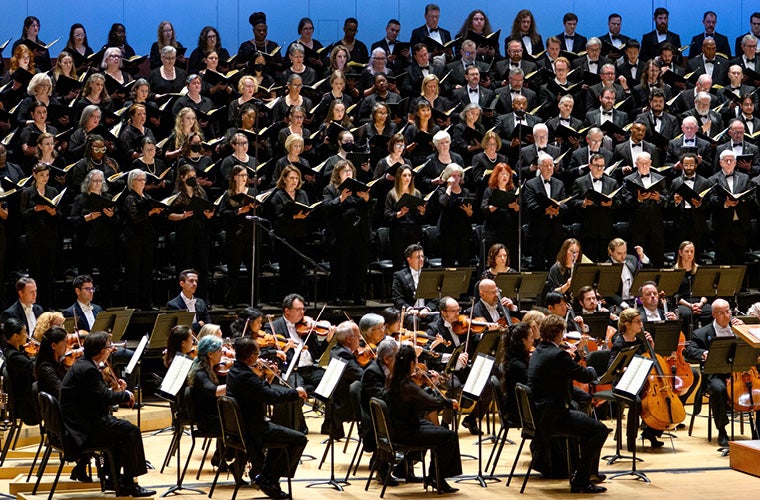
- RequiemFauré
- Les nuits d’étéBerlioz
- Selections from La damnation de FaustBerlioz