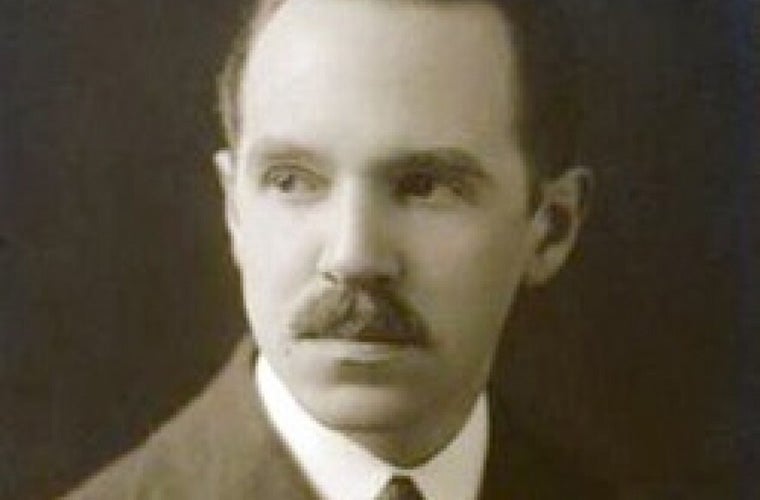
Charles Tomlinson Griffes
1884 - 1920
Biography
Charles Tomlinson Griffes (1884–1920) was a visionary figure in American music, a composer who transitioned from the traditional German Romanticism of his youth toward a lush, distinctive Impressionism that remains some of the most evocative ever written by an American. Though his career was tragically cut short at the age of thirty-five, Griffes’s music—noted for its shimmering textures, exotic scales, and brilliant orchestral color—stands as a bridge between the European traditions of the 19th century and the burgeoning modernism of the 20th.
Born in Elmira, New York, Griffes traveled to Berlin at age nineteen to study piano and composition, eventually coming under the tutelage of Engelbert Humperdinck. While his early works reflected the structural rigor of his German training, his return to the United States in 1907 signaled a profound stylistic shift. While working as a music teacher at the Hackley School in Tarrytown—a position he held for the rest of his life—Griffes became fascinated by the works of Debussy and Ravel, as well as the Russian school of Scriabin and Mussorgsky. This led to a period of intense creativity where he began to experiment with "tone poems" that captured natural imagery with unprecedented sensory detail.
Griffes’s most enduring contribution to the symphonic repertoire is The Pleasure-Dome of Kubla Khan (1917), an orchestral masterpiece based on the poem by Samuel Taylor Coleridge. The work is celebrated for its opulent orchestration and its use of "Orientalist" harmonies, reflecting Griffes’s deep interest in Javanese gamelan and Japanese scales. Equally famous is the orchestral version of The White Peacock, originally a piano piece from his Roman Sketches, which has become a staple for its delicate, translucent beauty and fluid rhythmic sense.
In his final years, Griffes’s style grew even more experimental, moving toward a starker, more dissonant modernism as seen in his Piano Sonata and the Poem for Flute and Orchestra. His sudden death from influenza-related complications occurred just as he was gaining national recognition as a leader of the American avant-garde. Today, Griffes is remembered as a poet of the orchestra, a composer who possessed an uncanny ability to translate light, atmosphere, and literary mystery into sound.
Featured Events
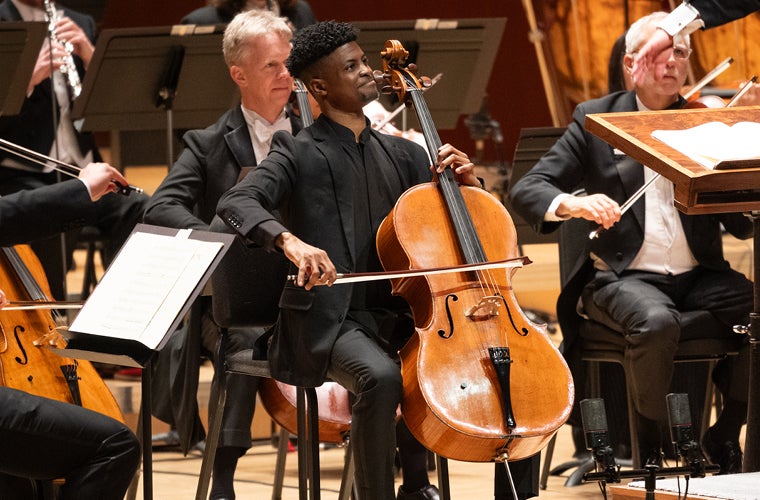
- Mathis der Maler (Matthias the Painter)Hindemith
- The Unanswered QuestionIves
- Andante CantabileTchaikovsky
- Variations on a Rococo ThemeTchaikovsky
- BacchanaleGriffes
- Nuages and Fêtes from NocturnesDebussy