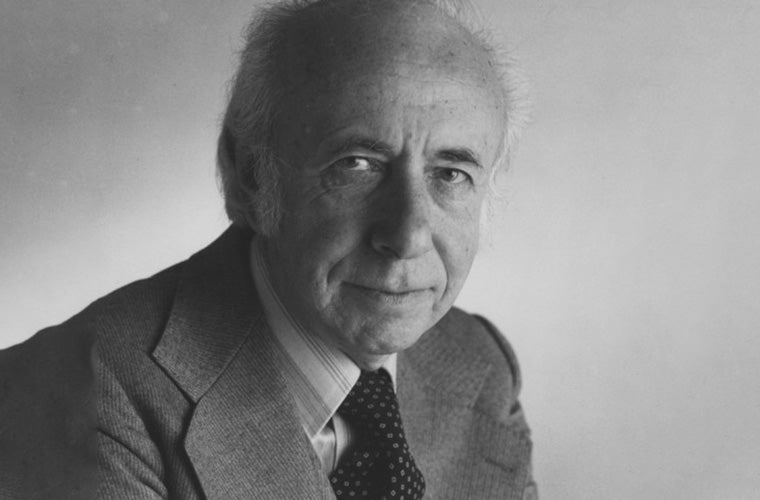
Morton Gould
1913 - 1996
Biography
Morton Gould (1913–1996) was a quintessential American polymath—a child prodigy, conductor, pianist, and Pulitzer Prize-winning composer who seamlessly dissolved the boundaries between "high" and "popular" art. His music is defined by a brilliant command of the modern orchestra, a sharp rhythmic wit, and a deep-seated belief that the American vernacular—from jazz and blues to spirituals and marching bands—belonged on the symphonic stage.
Born in Richmond Hill, New York, Gould published his first composition at age six and was performing as a professional pianist by his teens. During the Great Depression, he found his voice in the world of radio, serving as a conductor and arranger for major networks like NBC and CBS. This experience proved to be a masterclass in orchestral efficiency and accessibility; Gould learned to write music that was technically sophisticated yet immediately communicative to a mass audience.
His orchestral catalog is a vivid tapestry of Americana. Works such as Latin-American Symphonette (1941) and American Salute (1843)—a brilliant set of variations on "When Johnny Comes Marching Home"—became staples of the repertoire for their infectious energy and orchestral flair. Gould’s ability to weave folk elements into rigorous classical structures was further showcased in his Fall River Legend ballet suite and his Spirituals for Strings, which remains one of his most deeply felt and frequently performed works.
Late in his career, Gould’s lifelong dedication to the craft was met with the highest honors. In 1995, he was awarded the Pulitzer Prize in Music for Stringmusic, a work commissioned by the National Symphony Orchestra to honor Mstislav Rostropovich. He also served as the President of ASCAP for eight years, becoming a tireless advocate for the rights of fellow creators. Today, Gould is remembered as a master of "symphonic jazz" and a composer whose work captures the restless, vibrant spirit of 20th-century America.
Featured Events
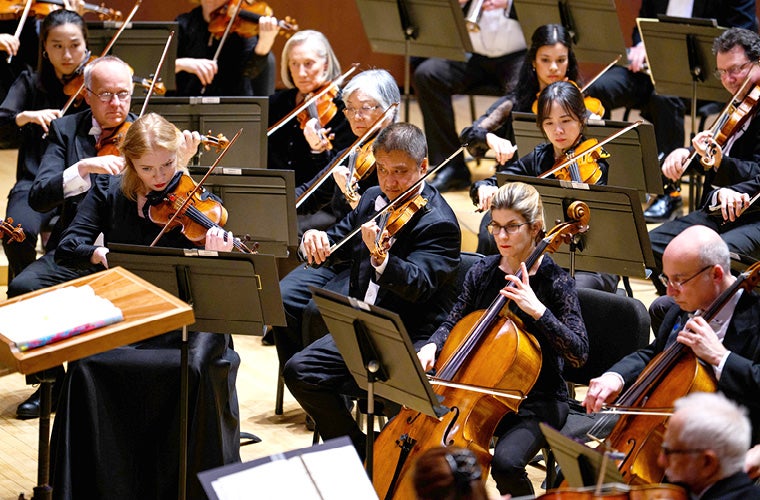
- Concerto for OrchestraBartók
- Violin ConcertoKorngold
- Spirituals for OrchestraGould