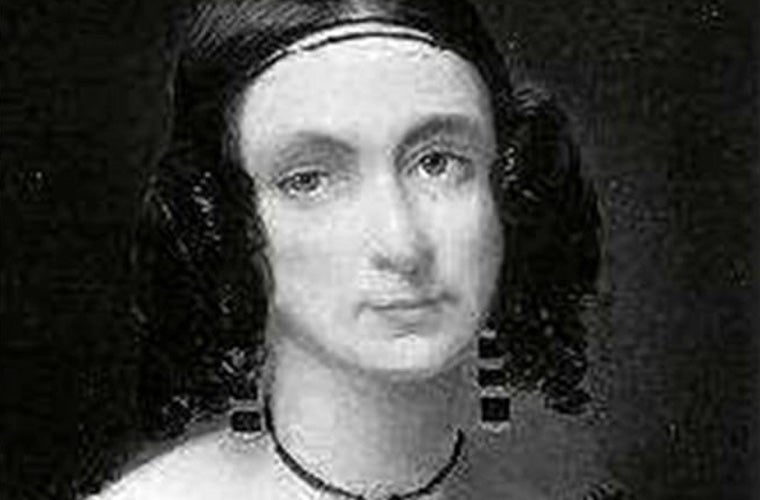
Louise Bertin
1805 - 1877
Biography
Louise Bertin (1805–1877) was a formidable figure in the Parisian musical world of the 19th century, a composer and poet who defied the social constraints of her era to leave an indelible mark on French opera and instrumental music. Despite being physically disabled from birth and navigating a professional landscape almost entirely closed to women, Bertin’s intellectual rigor and creative ambition earned her the respect of the most demanding critics and composers of her time, including Hector Berlioz and Victor Hugo.
Born into an influential family—her father was the editor of the powerful Journal des débats—Bertin was immersed in an atmosphere of high culture from a young age. She received a sophisticated musical education, studying under the renowned François-Adrien Boieldieu and later Anton Reicha, the legendary counterpoint teacher of Berlioz and Liszt. Her early works, including several comic operas and chamber pieces, displayed a precocious grasp of dramatic structure and a harmonic adventurousness that often pushed beyond the conservative tastes of the day.
Bertin’s most significant achievement was the 1836 opera La Esmeralda, for which Victor Hugo himself provided the libretto—the only time the great novelist collaborated directly with a composer. The work’s premiere at the Paris Opéra was a landmark event, though it was met with fierce political opposition from rivals of her father’s newspaper. Berlioz, who assisted with the rehearsals, praised her "vigorous and poetic" style, noting that her music possessed a structural integrity and emotional depth that rivaled her male contemporaries. Her orchestral writing, in particular, was noted for its colorful textures and bold, often somber, character.
In her later years, Bertin turned her focus toward chamber music and poetry, producing a series of sophisticated string quartets and keyboard works that further demonstrated her technical mastery. While her operas faced the challenges of mid-century Parisian politics, her legacy is currently undergoing a vibrant rediscovery. Today, she is recognized not merely as a pioneer for women in music, but as a sophisticated voice of the French Romantic movement whose works offer a unique blend of classical clarity and dramatic intensity.
Featured Events
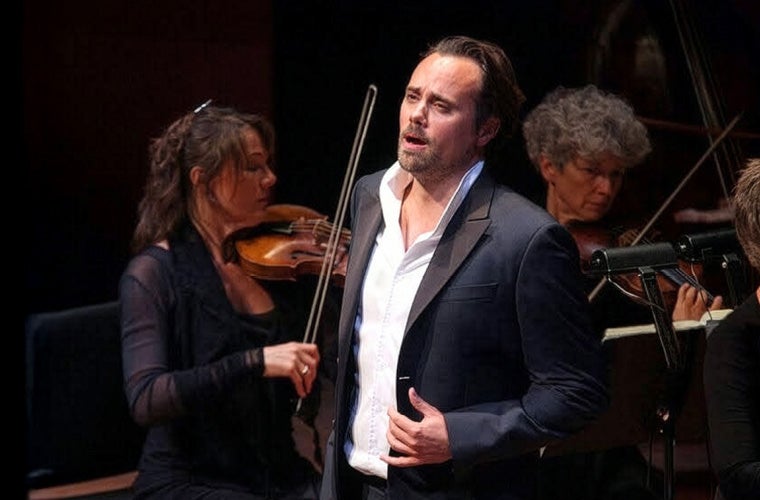
- Selections from Les contes d'Hoffmann (The Tales of Hoffman)Offenbach
- Overture to MignonThomas
- Selections from Roméo et JulietteGounod
- Overture to FaustoBertin
- Selections from CarmenBizet
- Overture to Orphée aux enfersOffenbach