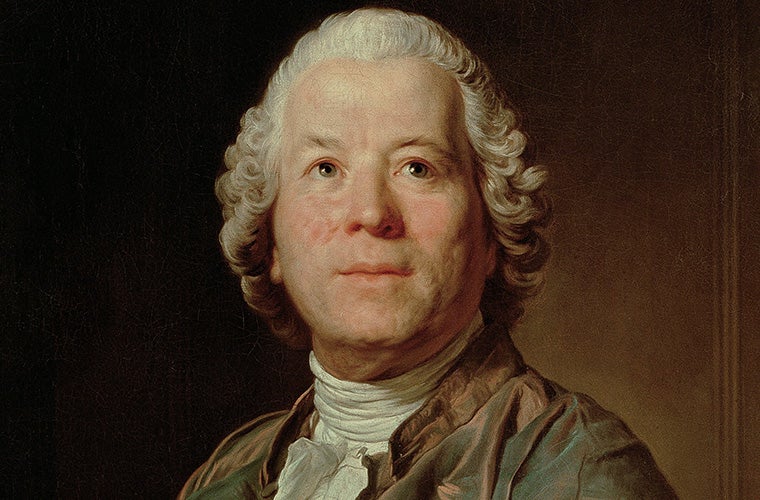
Christoph Willibald Gluck
1714 - 1787
Biography
Christoph Willibald Gluck was a visionary German composer who fundamentally reshaped the course of Western music. Often called the "Reformer of Opera," Gluck transitioned the art form from the rigid, ornamental style of the Baroque era into the emotional clarity of the Classical period.
Born in Bavaria to a family of foresters, Gluck resisted his father's profession to pursue music, reportedly running away to Prague as a teenager to find his way. He traveled to Milan in 1737, where he studied with Giovanni Battista Sammartini and premiered his first traditional Italian operas. Before finally settling in Vienna in 1752, Gluck spent years as an itinerant musician, performing in London—where he met George Frideric Handel—as well as Dresden and Copenhagen.
By the 1760s, Gluck became disillusioned with the state of opera, which he felt had become a mere showcase for vocal gymnastics at the expense of drama. In collaboration with librettist Ranieri de’ Calzabigi, he introduced a new aesthetic of "noble simplicity." He famously declared that music should serve the poetry and the plot, rather than interrupting the action with superfluous ornaments. To achieve this, he streamlined plots, replaced dry harpsichord-led dialogue with rich orchestral accompaniment, and integrated the chorus and ballet directly into the story. His masterpieces, including Orfeo ed Euridice and Alceste, remain cornerstones of the repertoire for their profound emotional directness.
In 1773, under the patronage of his former student Marie Antoinette, Gluck moved to Paris. His arrival sparked a famous intellectual rivalry between his supporters and fans of traditional Italian melody. This period of intense creativity culminated in Iphigénie en Tauride, often cited as his finest achievement. Gluck eventually returned to Vienna for his final years, where he died in 1787.
While primarily remembered for the stage, Gluck’s influence on the orchestra was immense. He was among the first to treat the overture as a thematic introduction to the drama rather than a separate, unrelated piece. His emphasis on dramatic integrity and orchestral color directly influenced later giants such as Mozart, Berlioz, and Wagner, who viewed him as a spiritual ancestor of the modern music drama.
Featured Events
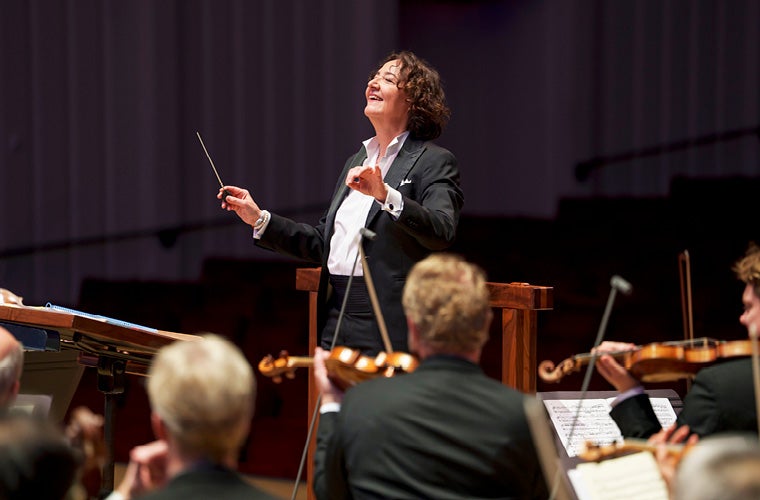
- Symphony No. 9Shostakovich
- Double ConcertoBrahms
- Orpheus UndoneMissy Mazzoli
- "Dance of the Blessed Spirits" from Orfeo ed EuridiceGluck