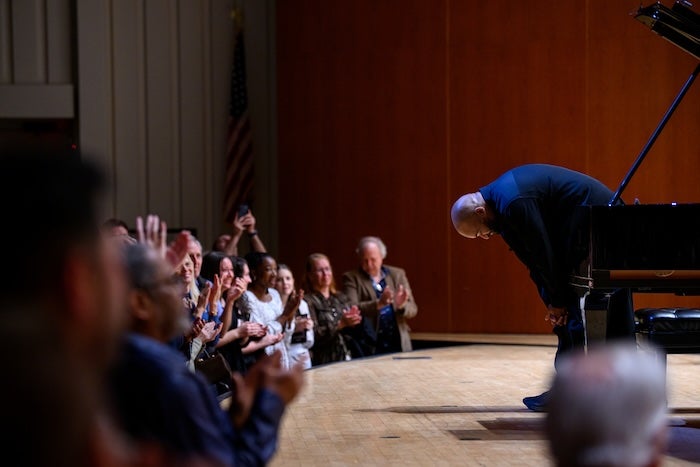
Ross Reviews: Pianist Sullivan Fortner Takes New Look at Gershwin in Classical Debut
Concert Reflections with Jon Ross
In this series from local music journalist Jon Ross, he reflects on the ASO’s Delta Classics Series with fresh insights into each concert.
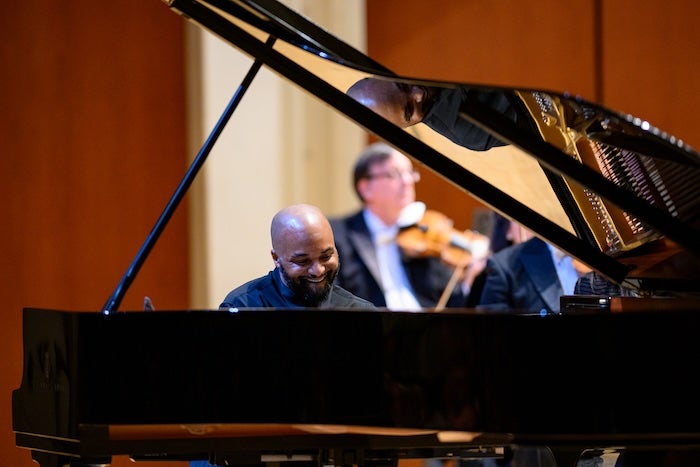
In a piano-vocal duo with longtime collaborator Cecile McLorin Salvant, or as a leader on his recent album “Leave that in There,” the jazz pianist tinkers, pushes and pulls, playing with melody, rhythm and harmony.
In his classical debut Thursday at Symphony Hall, Fortner and the Atlanta Symphony Orchestra took that approach with George Gershwin’s “Rhapsody in Blue,” bringing the oh-so-familiar chestnut an evolving state of play. Led by Kristiina Poska, also in her Atlanta debut, “Rhapsody” sizzled with a kinetic energy as Fortner prodded at preconceived notions of how the tune should sound. Thursday, the ASO produced a treasure, music that felt special from the start: Clarinetist Jesse McCandless began the tune with arguably the most famous glissando in American music, a squeeze that feels both dirty – perhaps a little bit forbidden – and bright.
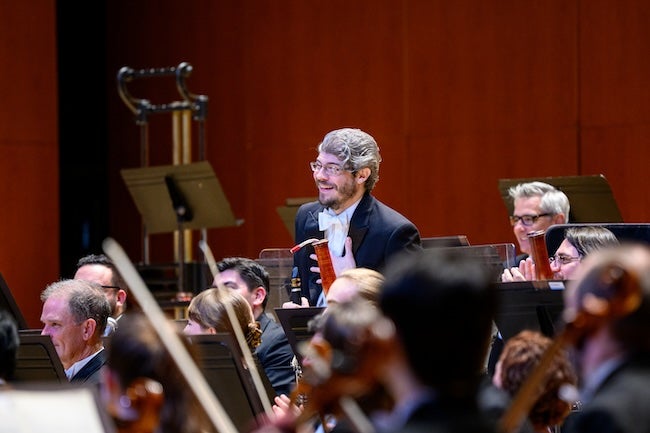
Fortner, Poska and the ASO head to Athens tonight for a 7 p.m. show at the UGA Performing Arts Center. A repeat performance returns to Symphony Hall Saturday at 8 p.m.
This may be the start of a continued classical interest by the pianist. In April, Fortner told SF Classical Voice the group Owls had commissioned his first string quartet. To prepare, he was taking counterpoint lessons while really studying what makes “Rhapsody in Blue” tick. (Not to conflate very different jazz artists, but Wynton Marsalis also made an early foray into symphonic form with the Atlanta Symphony and his “Blues Symphony” in 2010. Three years later, pianist Marcus Roberts premiered a piano concerto at Symphony Hall.)
I remember first seeing Fortner in Atlanta at the 2014 Jazz Festival, performing in the late Roy Hargrove’s band. In the ensuing years, he’s been a regular presence in the city, performing often at Spivey Hall with singer Cecile McLorin Salvant (spotted in the crowd Thursday night) and at the 2024 Jazz Festival.
So it’s a treat that he chose a city so familiar with his approach to jazz as the place to stretch into classical performance. And the audience got a large dose of his approach: Lengthy, engaging solo passages stretched the breezy “Rhapsody” past the 20-minute mark. When the orchestra stopped to listen, Sullivan’s piano thundered through the hall, but his sound sometimes got lost amid loud orchestral playing.
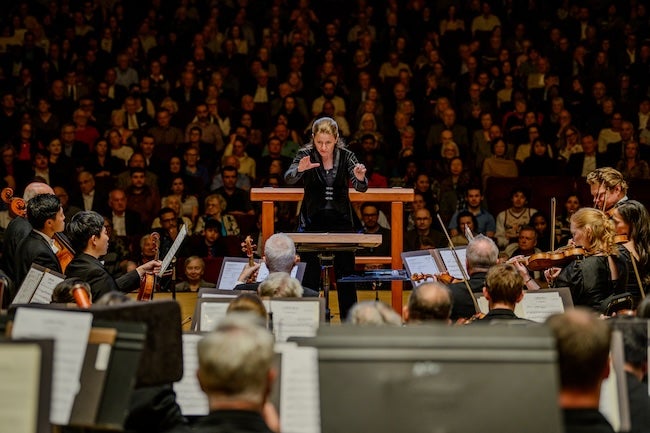
After such a thrilling affair, Carl Nielsen’s Symphony No. 4 elevated the evening to a truly memorable one. It’s hard to forget the two-timpani battle toward the end of the work, but the piece is filled with sublime moments played Thursday with beauty and gusto.
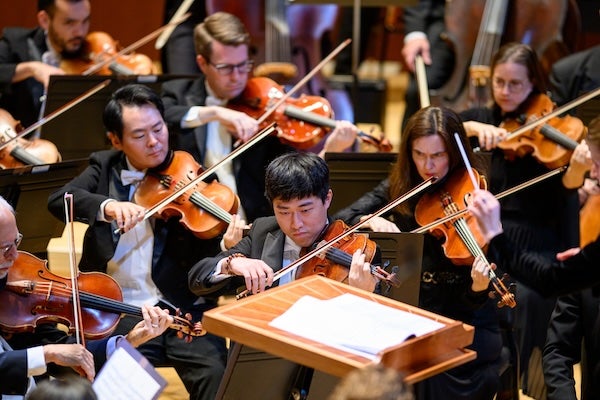
Take, for instance, the gripping cloudburst of strings that open the fourth movement, a bracing sound that drifts from the violins to the cellos, emerging like a summer downpour on a sunny day. The four-movement work, played without pause, hummed along at a bright clip, even in subdued passages. After all, the work, titled “The Inextinguisable,” is rooted in hope and optimism. Even without Poska’s brief explanation to the audience at the top of the program, it’s clear that Nielsen and Gershwin, at least in the examples presented Thursday, fit together quite well.
Poska opened the evening with “Catfish Row: Suite from Porgy and Bess,” grounding the audience brilliantly in Gershwin’s syncopated soundworld. Filled with familiar melodies, it’s the first time this music has been performed by a major organization since the Atlanta Opera’s staging of Porgy and Bess ended abruptly in March 2020 after three of five planned performances.
Innovative programming by the ASO is a balm at a time when classical performance isn’t a given. While Oracle famously saved the Tennessee Symphony from a canceled season weeks ago, now the board of the Phoenix Symphony has put an end to its season. These are but two small examples that demonstrate the importance of showing up in the seats, demonstrating a demand for live classical music.