Ross Reviews: Stutzmann’s Kinetic Conducting on Display During Second Brahms Revealed Program
Concert Reflections with Jon Ross
In this series from local music journalist Jon Ross, he reflects on the ASO’s Delta Classics Series with fresh insights into each concert.
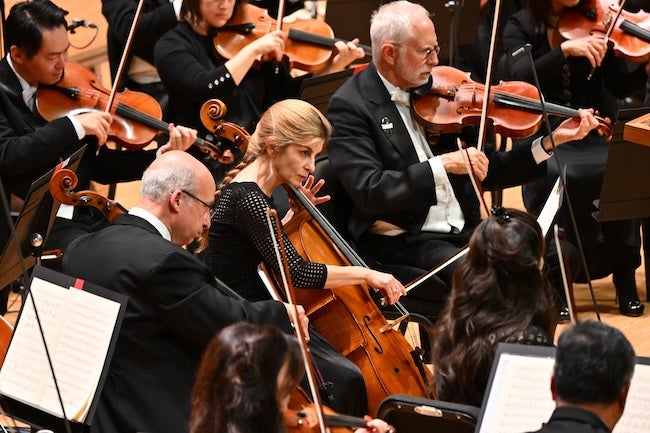
Abruptly pivoting to face the first violins, Nathalie Stutzmann started jousting Thursday night, her baton piercing the air. Like a kid playing make believe, a wry smile on her face, she poked and prodded to highlight a musical attack. Later in the evening, she crouched closer to the orchestra, like a basketball coach mapping out a play amid a huddle of players. When, during bold, sweeping movements, you caught a glimpse of her expression, she’s likely deeply engrossed in the music, eyebrows arched, eyes wide – a look of contentment.
Stutzmann’s full-body conducting – a highly physical shaping of notes, of helping the musicians convey a musical interpretation that could change in the moment – isn’t unusual among music directors. But it’s no less a joy to watch an Atlanta Symphony Orchestra concert and see how her mannerisms influence the music. This kinetic leadership, a tightly controlled but joyful way of leading the orchestra, adds to the concert experience and, arguably, makes the music better.
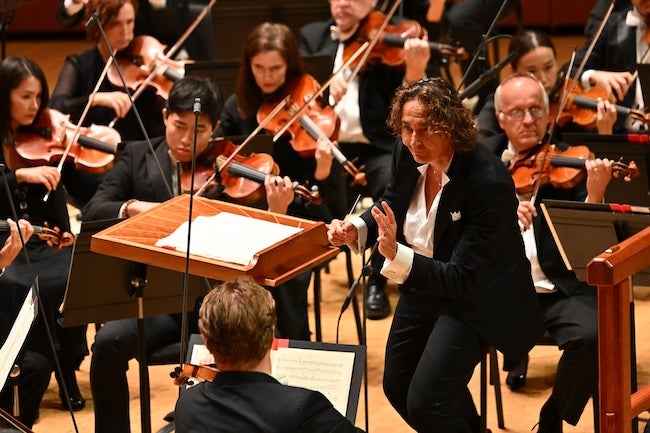
Emotive mannerisms fit the theme: Thursday night at Symphony Hall was all about drama. Part of the season-long Brahms Revealed project, Stutzmann drew a direct line between the composer and Richard Wagner, pairing Brahms’ Third Symphony with music from “Lohengrin,” “Tristan and Isolde,” and “Rienzi.”
Stutzmann has made Wagner a big part of her conducting career. She made her debut at Bayreuther Festspiele in 2023, leading “Tannhäuser,” just the second woman to conduct at the 150-year old event. Last summer, she returned to Germany to lead the festival’s first fully staged program of “Rienzi.” Closer to home, her first performance with the ASO included Wagner’s “Siegfried Idyll.” And she also brought the overture to “Tannhäuser” (2023) and “Ring without Words” (2024) to Atlanta. In January, she’ll juxtapose Brahms’ Fourth Symphony with music from “Die Meistersinger von Nurnberg” and “Die Walkure.”
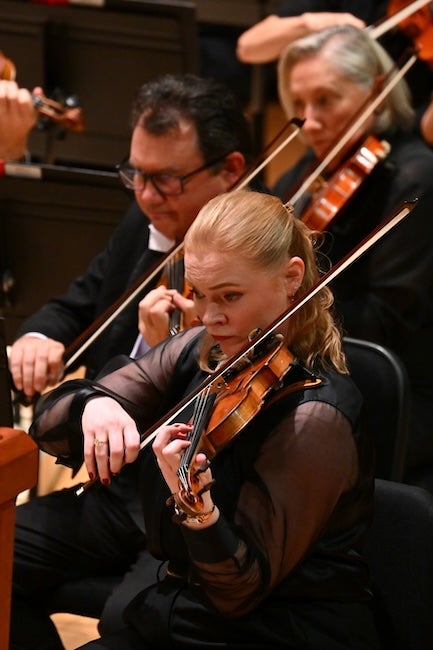
All that Wagner focus has paid off, both in Stutzmann’s interpretation of the works and her ability to translate that musical worldview to the orchestra. First on the program, the prelude to “Lohengrin” emerged slowly with shimmering, angelic strings, Stutzmann keeping a pace that allowed the music to blossom without stagnating, building tension. These exposed, quiet string parts leave little room for missteps. On Thursday, the ASO played with deliberate care that also created emotional depth. When the music finally swelled, the entire orchestra singing out, it sounded like magic.
Finding the connective tissue between Brahms and Wagner, two guys who had a love/hate (or maybe “begrudgingly respect/hate”) relationship, is a fascinating way to program Brahms’ symphonies. His Third Symphony was written after Wagner’s death and features a hat-tip to the composer in the form of a “Tannhäuser” melody. By not programming the Wagner work Brahms alluded to on the same program, Stutzmann took listeners into the composers’ complicated relationship without putting too fine a point on the matter. Given room to be heard on its own merits, the Brahms symphony stood out as a highlight of the evening, the musicians turning in a shimmering, joyful performance full of rhythmic precision and complexity.
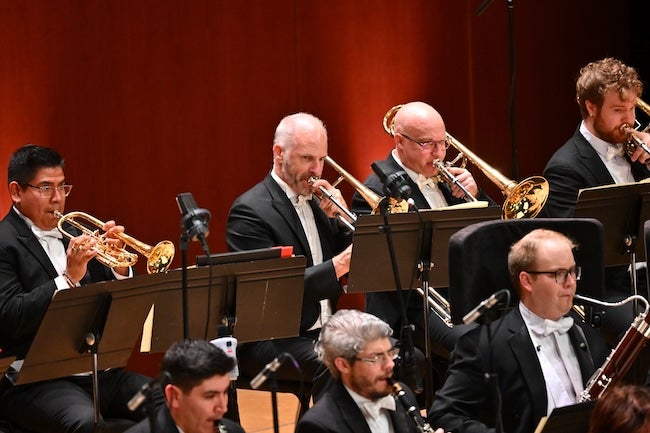
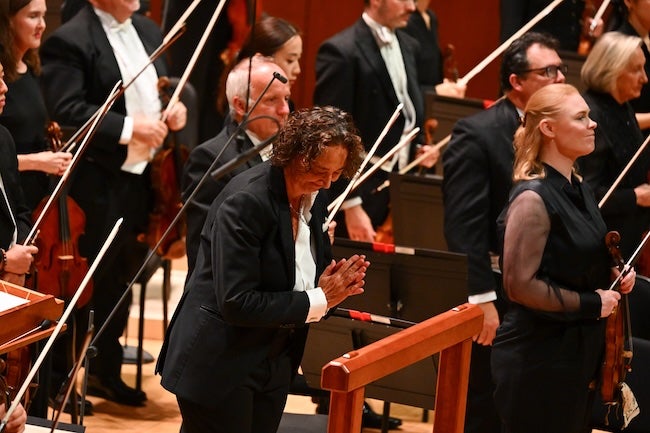
A question: What do you watch when the orchestra is on stage? Are you focused on the string players, swaying with the music, the stoic members of the percussion section, counting measures until their entrance? When your mind wanders, what catches your focus? Next time, watch Stutzmann for a bit and see if you can hear the music in her mannerisms.