Ross Reviews: Schumann + Bruckner
Concert Reflections with Jon Ross
In this series from local music journalist Jon Ross, he reflects on the ASO’s Delta Classics Series with fresh insights into each concert.
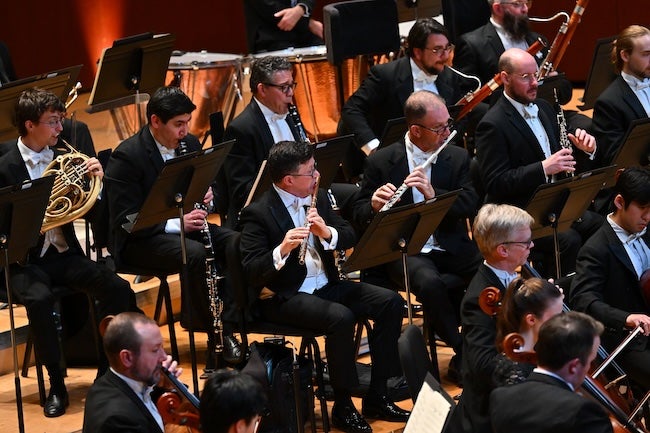
If you’ve ever been to a college basketball game — or, really, a sporting event of any kind — you’ve likely heard the modern echo of Bruckner’s Fifth Symphony. In fact, at the mere mention of “Seven Nation Army” by the White Stripes, you might not be able to get the bass line out of your head all day. And to think it all started back in 1876 with a sprawling, monumental 81-minute tour de force of a symphony.
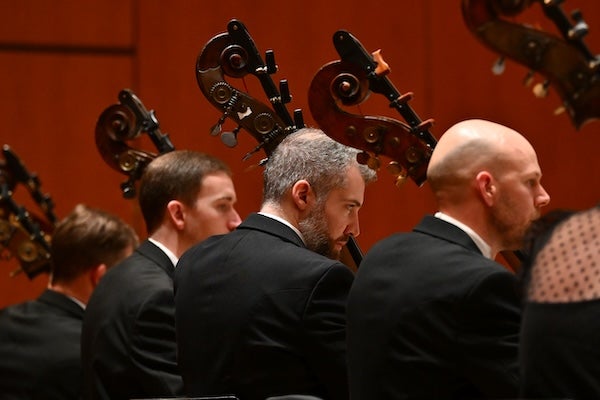
When the melody emerged on Thursday night at Symphony Hall, wrapped in rapturous string playing and buffeted by thundering horns, the Atlanta Symphony Orchestra played a tune both instantly familiar and refreshingly modern. When I say the 81 minutes flew by, that’s not really an exaggeration. It’s a team effort: the brilliant horn section stood out among an exceptional array of brass that sounded as gripping in soft passages as it did during the exultant, organ-like chordal conflagrations that end the symphony.
With a simple riff, Jack White (actually spotted in an Atlanta restaurant around the time) helped the melody take on a new life beyond the concert hall. The similarities might be coincidental – I couldn’t find confirmation from the source – but it’s a wonderful example of how music can change, providing a new entry point, a greater accessibility for listeners who might blanch at the prospect of sitting through a multi-movement classical work.
At Symphony Hall, under the leadership of music director Nathalie Stutzmann in her final concert series of 2026, the original work proved even more accessible, just as spine-tinglingly glorious – and just as arena-rocking – as the White Stripes tune.
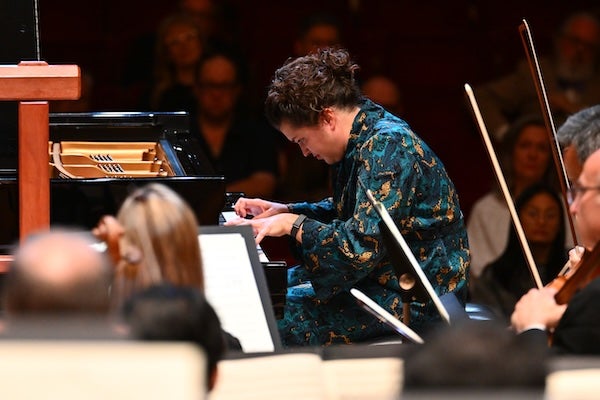
On the first half of the program, ASO Artist-in-Residence Anna Geniushene worked with the ASO to create a version of Schumann’s Piano Concerto so musical, so emotional that the pianistic acrobatics and flashes of keyboard fireworks felt not like a showcase for a pianist trying to impress an audience but like a natural piece of dialogue between piano and orchestra. In just one example, she played nimble arpeggiated passages with such a delicate strength, and with such precision, that what could possibly sound rote and mechanical sang out with a brilliant majesty.
In fact, in a video promoting this appearance, the pianist spoke with Stutzmann about getting the piano to do just that – to sing. And that vocal approach really can be felt in her pianism, everything from her ability to conjure a complex, layered beauty from the keyboard to her comfort and thoughtfulness in constructing phrases.
It’s the third concert series in as many weeks for Geniushene–she performed with the youth symphony in between classical series engagements–and she can’t return soon enough. Sadly, listeners will have to wait until the final concert of the season, when she brings Rachmaninoff’s “Rhapsody on a Theme of Paganini” to the stage. By then, Geniushene and Stutzmann will have further solidified their strong working relationship, an alliance that has produced exquisite music since her debut in April 2025.
Thursday proved an all-around special evening at Symphony Hall, capping off a string of three successive concert series appearances for Stutzmann. She’ll return January 14 with Brahms’ Fourth Symphony. Judging by what I heard Thursday, I’d hope that a recording of the fifth isn’t far off in the future.