Ross Reviews: The ASO Dazzles in Mahler's Resurrection Symphony
Concert Reflections with Jon Ross
In this series from local music journalist Jon Ross, he reflects on the ASO’s Delta Classics Series with fresh insights into each concert.
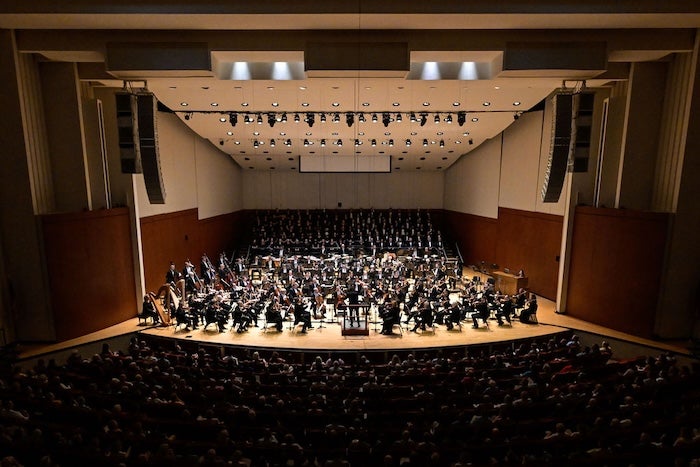
A little more than a decade ago, the Atlanta Symphony Orchestra turned to Mahler’s “Resurrection” symphony to mark a triumphant return from calamity. In opening the 2015 season with the work after a two-month lockout of the musicians the season prior, music director Robert Spano seemed to be looking to reassure audiences about the ASO’s direction.
Those performances were weighed down by significance.
On Thursday, Music Director Nathalie Stutzmann turned to Mahler’s Second Symphony not as a symbol of an orchestra rising from the ashes but as a celebration of what the organization has become. Or maybe there’s no deeper symbolism at all. Could it have been a surface-level celebration of exceptional music making, no greater depth needed? After all, the expansive work calls for ASO’s best asset, its chorus.
On Thursday, the chorus aligned with guest artists soprano Talise Trevigne and mezzo-soprano Rihab Chaieb, making her Atlanta debut; and a much-enlarged orchestra for a gripping performance of a masterwork. The concert, which has no intermission, repeats Saturday at 8 p.m. and Sunday at 3 p.m.
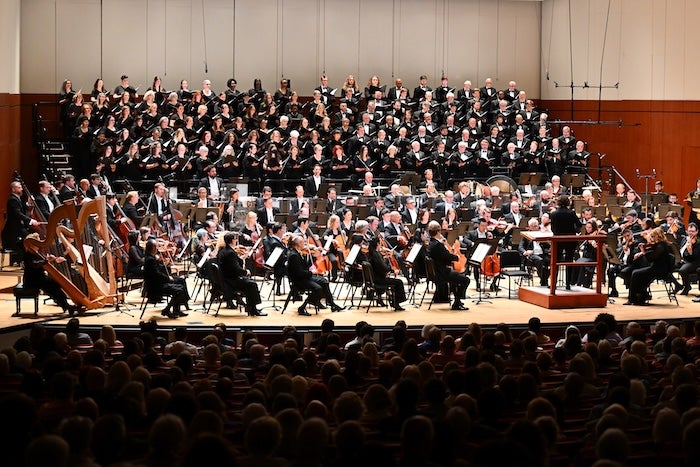
Indeed, the first thing that hits audience members is likely that enlarged orchestra, the sheer magnitude of it all. Musicians seemed crammed onstage, basses partially hidden behind harps, an array of percussion featuring two timpanis arrayed in front of the 115-ish members of the ASO choir. Marshaling all these forces, keeping everything together and flowing musically, deserves praise by itself. But after hearing the performance, it stands out as one of the greatest nights of Stutzmann’s tenure in Atlanta.
The first movement started with a burst of aggression. Searing, rumbling cellos and basses roared a spiky melody atop a string shimmer, the sound bursting out from the center of a mass of musicians. Throughout the piece, Stutzmann emphasized the aggression and bombast throughout the work, contrasting beautifully with the gentleness that emerges in its wake. She used the push and pull between darkness and light, turbulence and calm, to craft an aural narrative filled with suspense.
Mahler wrote the first movement as a standalone symphonic poem before returning to his desk to develop the entire symphony. That factoid is important because the first movement contains multitudes and can easily stand on its own; that’s why Mahler called for a pause of “at least five minutes” after the first movement. Stutzmann didn’t pause that long, but a re-tuning by the orchestra and late seating in the audience did the trick of separating the first movement from the second, a huge contrast in overall feel. Here, it’s good to remember that Mahler called the movement, or really any broad pastoral writing that embraces folk sounds, “the raisins in his cakes.” On Thursday, the sweetness gave space to process the first movement and prepare for what is to come.
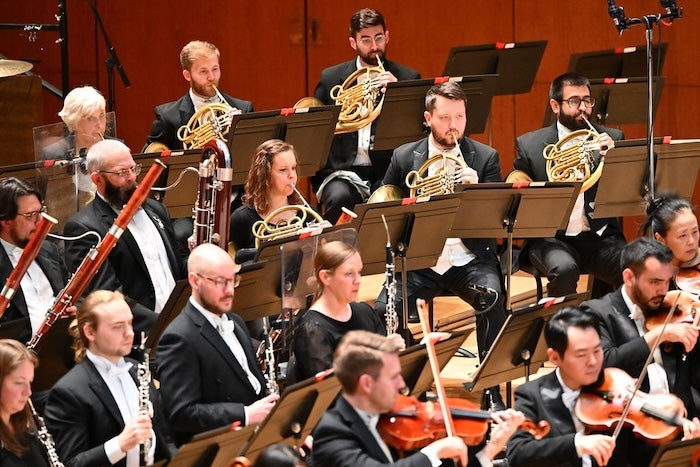
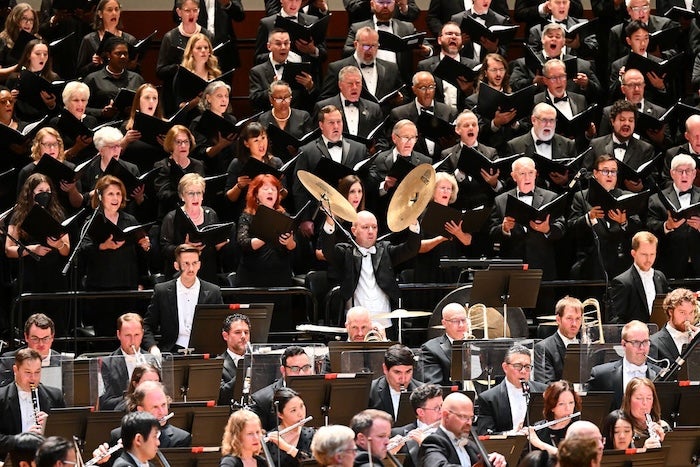
During a night of standout performances by the entire ensemble, no section sounded as mesmerizing as the brass, which emerged with fff walls of sound, tender piano serenades and vibrant, thrilling brass chorales. A close second? The chorus. When they finally emerge, slowly and delicately, at the tail end of the piece, it’s with a pure, radiant light in a stage whisper, proving that an intricate, full and complex sound can happen at the quietest of dynamics.
Ultimately? It’s just fun music: fun to hear, fun to watch performed. There’s even a section with arena rock drumming on timpani, three percussionists wildly wailing away on the two timpani arrays.
The World Cup comes to town next week, shining a sports spotlight on Atlanta to rival the Olympics. No doubt I’ll be thinking about the athletic performance I just witnessed, long after soccer fans leave the city. The "Resurrection" is an epic journey of a piece, and Thursday it was performed passionately by an ensemble that (trite sports phrase incoming …) left everything out on the field. Taken with last week’s Tchaikovsky performance, Atlanta audiences have witnessed in the span of two weeks, the best Stutzmann performances with the ASO.