Ross Reviews: Fauré Requiem with the ASO Chorus
Concert Reflections with Jon Ross
In this series from local music journalist Jon Ross, he reflects on the ASO’s Delta Classics Series with fresh insights into each concert.
Fauré's “Requiem” is a touching, dramatic work that showcases the prodigious talents of the Atlanta Symphony Orchestra Chorus. That was true a decade ago, when the group last performed the work at Symphony Hall, under the direction of Donald Runnicles. And that is, of course, true of the group’s 1987 recording with Robert Shaw. But if you’ve heard Fauré’s “Requiem” in Atlanta before, if you’ve listened to that Grammy-winning ’80s recording until the piece has been committed to memory, is it possible to be surprised and delighted and taken aback by a new take on the piece?
While it’s not quite the choral showcase of the Brahms’ "Requiem," which Atlanta listeners will hear in April, the Faure is gripping in its intensity: So much of it is so quiet, almost impossibly so for a choir that large, but that all makes the loud even more incredible. When sung with careful attention to dynamic shifts, as it was last night, there’s nothing better. Fauré's "Requiem" is quite delicate, until it’s thunderously aggressive.
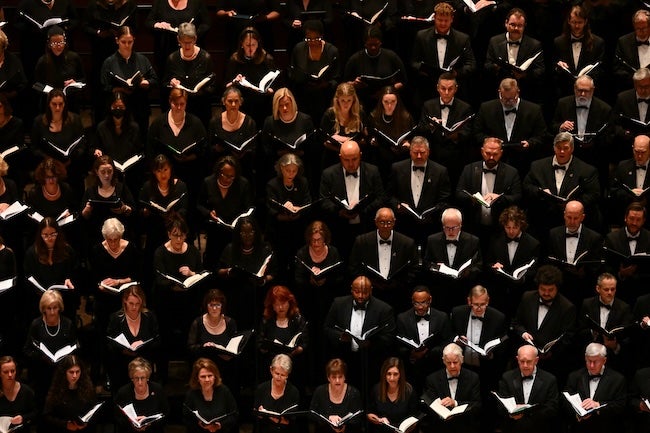
As a listener, I know all that, and I was prepared to hear a good performance of a cherished choral work. But I have never heard the “Requiem” like I heard it last night.
Much of that credit goes to the restrained, careful choral singing, and the energetic orchestral playing. But halfway through the piece, the focus undeniably turned to male soprano Elijah McCormack, who stopped time with his performance of “Pie Jesu.” I’ve been wracking my brain for a better way to describe how, once he started singing, McCormack drew all the focus in the room, his voice like a magnet. I heard gasps of excitement around my seats; after the oh-too-short “Pie Jesu,” I saw audience members with tears in their eyes.
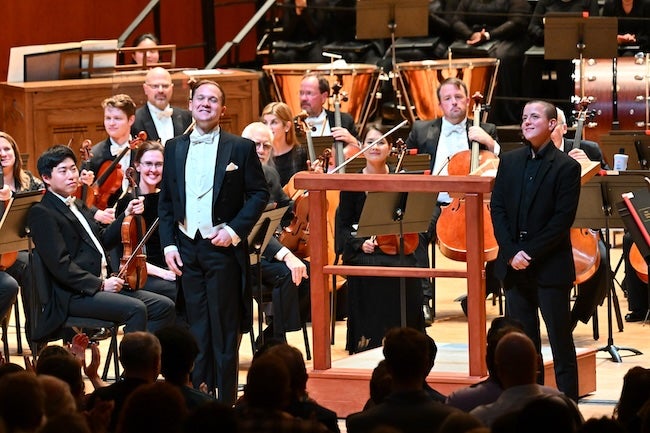
McCormack sang with a fullness that came as a bit of a shock. It’s not just the novelty of a male voice in that range, or the subtle shading of a high voice part, or that his voice is full of an innocence, a wonder, a quizzical exploration that feels like it shouldn’t be possible for a 30-something singer – all those attempts at descriptions cheapen what I heard on Thursday. You simply had to be there. (The program repeats Saturday at 8 p.m. and Sunday at 3 p.m.)
McCormack pulled all the focus during his one solo turn, but baritone Leon Košavić sang his part quite well, adding a rich, deep resonance to his “Requiem” passages.
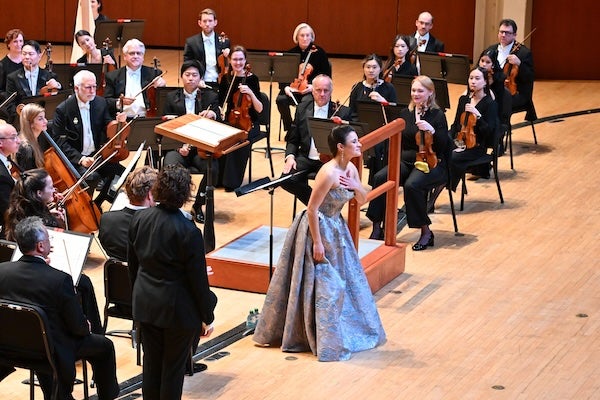
On the first half of the program, mezzo-soprano Juliette Mey shone throughout the Berlioz song cycle “Les nuits d’été.”
I felt a playfulness, a gameness at work between the orchestra and Mey, each song in the seven-movement work full of its own unique joys, despite the at-times heartbreaking subject matter in the lyrics.
All evening, Music Director Nathalie Stutzmann played up a contrast between soft and loud, bright and dark. On the first half of the all-French program, three orchestral selections from Berlioz’ “La damnation de Faust” set the mood. While not as operatic and bombastic as the entire Berlioz work, these short pieces nevertheless got the audience in the right headspace. But really, nothing could have prepared listeners for what was ahead.