Electric, Enthusiastic Audiences the Highlight of ASYO's Spanish Tour
After the second encore–or maybe it was the third–the Spanish audience started clapping in a Flamenco rhythm, displaying an exuberance, a hunger for more, that a simple ovation couldn’t convey.
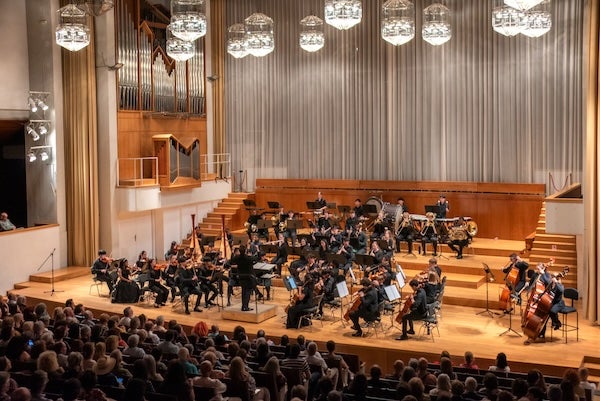
Sitting on stage at the Teatro Auditorio Riberas de Guadaíra in Seville, heads spinning thinking of what to play to reward their listeners, the musicians of the Atlanta Symphony Youth Orchestra simply beamed. None of them had ever heard an audience beg for four encores.
“It was probably the most electric thing I’ve ever been a part of,” remembered bassoonist Connor Stewart.
“The Spanish crowd is something else. They never let you stop,” trumpeter Nick Danford added. In fact, during the group’s final performance, at the 75th International Granada Festival of Music and Dance, the crowd went wild until the musicians played six encores. “It’s exhilarating. You can’t stop smiling, and they can’t stop smiling at you.”
The 117-member Atlanta Symphony Youth Orchestra performed in Seville and Granada as part of a 10-day, four-concert European sojourn, the group’s first international tour in nearly 20 years. After a June 5 performance in Valladolid at the Centro Cultural Miguel Delibes to start the trip, it was on to Seville and two concerts in Granada before heading back to Atlanta. In between those performances, musicians had plenty of time for tourist activities or to just wander around town, basking in the culture of a Spanish summer. For many of the musicians, the trip marked their first time out of the country.
“It was exciting, and it was almost overwhelming, but in a good way,” Tyler Landers, who plays tuba, said. He balanced trying to experience Spain and see all the tourist sites in each city with preparing for concerts at night, learning eventually to pace himself and conserve enough energy for performances.
“It was exciting, and it was almost overwhelming, but in a good way,” he said.
Led by William Langley, the ASYO took a program of Verdi, Ravel and Tchaikovsky to each city. Langley prepped two encores with the musicians – “Aunt Marge’s Waltz” from the “Harry Potter” films and Brahms’ First Hungarian dance – but he certainly didn’t anticipate needing additional repertoire.
“We seriously were not prepared for more, and so we had to start cycling back through our music,” Langley said.
“The audiences were incredibly warm and inviting,” he continued. “We were thrilled to see each hall that we played in just totally packed.”
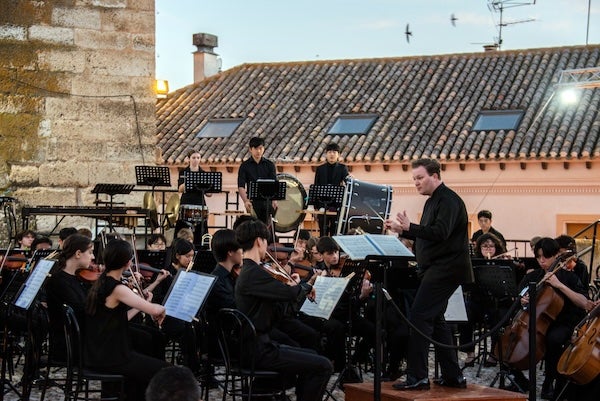
These rapt listeners, audience members intent on hearing everything the students performed, also seemed a bit taken aback at the age of the musicians. They couldn’t believe the ASYO wasn’t a professional orchestra, said Langley, who characterized the trip as a resounding success.
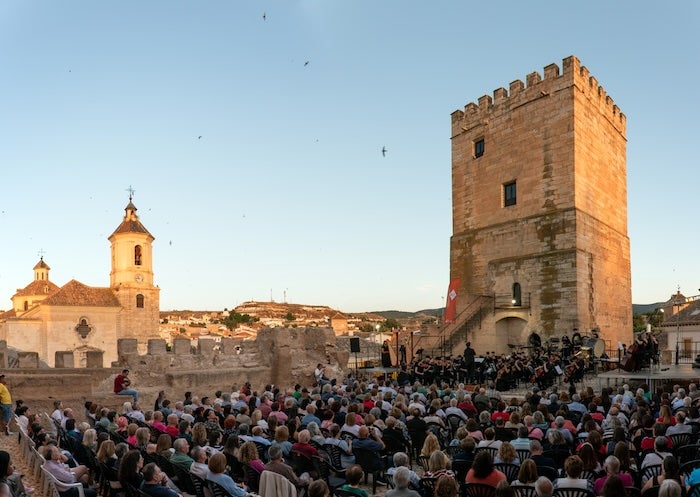
For many of the musicians, the Spain trip marked their first time on tour. Outside of the friendly confines of Symphony Hall, where they rehearse around 30 times each season and perform three concerts, they were forced out of their comfort zones, adapting to the acoustic peculiarities of each venue (including a castle courtyard).
“I saw a lot of people in real time, quickly gathering what was going on in the situation, and we were able to just get right into the music,” Langley said. “So no time was wasted. I'm thrilled that all of our hard work at home paid off abroad.”
And when things didn’t go as planned – Langley remembered well the lack of air conditioning in the scorching venue in Seville – the musicians learned to adapt.
“They are just kind of unphased,” he said. “They’re like ‘How are we going to make this work?’ Because there’s no other choice than to make it work and do our best.”
Take out the European site seeing and the chance to perform for foreign crowds full of admiration, and the greatest asset of the Spanish tour may have been the chance to get to know their fellow musicians. Danford said that he doesn’t get a chance to really talk with musicians from other sections; the only time they see each other is at rehearsal or during a performance, when there’s a job at hand.
“On this trip, we were so close, and for so long, that we just made friends, we made connections,” he said. “The people that I met on that trip will probably be lifelong friends.”
With all these new connections and experiences, what’s the first thing Danford did when he got back to Atlanta?
“I went home,” he said, “and I slept for a day.”