Ross Reviews: New Coleman Work Highlight of ASO’s Second America @ 250 Celebration
Concert Reflections with Jon Ross
In this series from local music journalist Jon Ross, he reflects on the ASO’s Delta Classics Series with fresh insights into each concert.
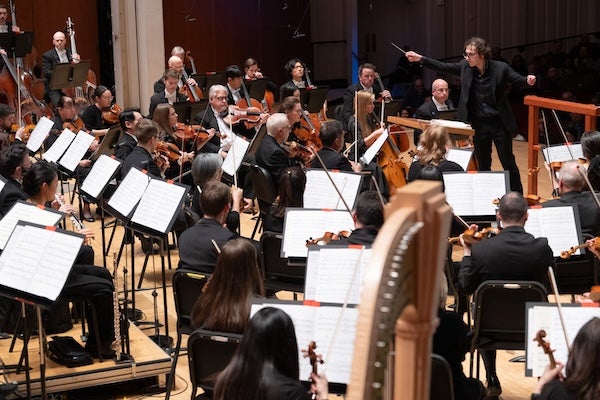
Photos by Rand Lines
FEB 13 | Is there a more American music than swing? On Thursday at Symphony Hall, the Atlanta Symphony Orchestra’s second America @ 250 celebratory concert featured guest conductor Teddy Abrams leading clarinetist Martin Fröst through two seminal works born from Big Band greats. (It so happens that Symphony Hall is welcoming a slate of jazz musicians this spring, including a two-night residency with the phenomenal vocalist Samara Joy)
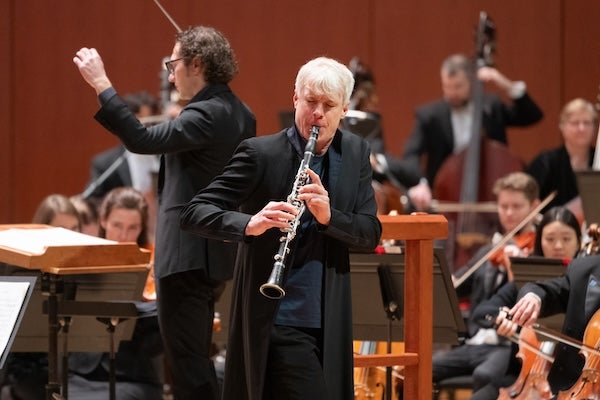
Opening with Artie Shaw’s “Concerto for Clarinet,” written in 1940, Fröst blazed through the piece with a flexible, dynamic playing style, grounded by a buttery, reedy tone. The pleasant starter, an 8-minute romp through a stereotypical post-World War II American sound, turned the orchestra into a quasi-jazz ensemble. This transformation led to a few spots where orchestra and soloist seemed out of sync, but Fröst simply dazzled in technical passages, including a lengthy cadenza.
The frothy bit of Big Band fun proved a stark juxtaposition to the highlight of the evening, the Atlanta premiere of Valerie Coleman’s serious look back at American history, “Renaissance: Concerto for Orchestra.” The ASO co-commission premiered with the Philadelphia Orchestra in 2024. The three-movement work brings the entire orchestra under the spotlight, not with flashy bits of playing (though there are those), but by creating a moody, stark aural landscape that demands a listener’s attention.
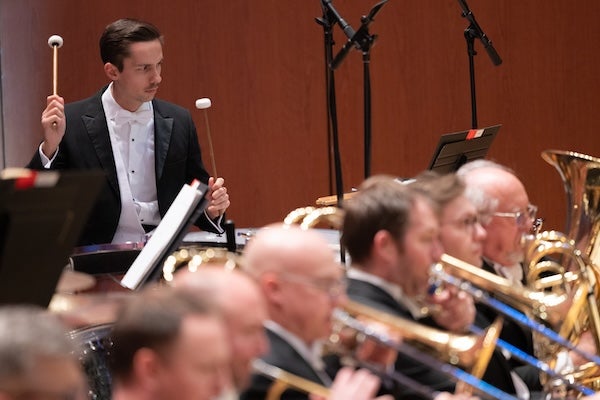
It’s hard to ignore a work of such magnitude. You don’t have to know that Coleman programmatically created the work based on the paintings of Jacob Lawrence, that the movements work through war and strife and struggle. The music itself is an elegiac exploration of collective memory.
The piece cultivates history, at a time when even learning from looking back is under attack, bearing witness to America’s traumas and joys. I don’t think I’ve been as instantly enamored with an ASO performance since Joel Thompson took the stage in the 2022 opening concert, narrating his “To Awaken the Sleeper.” Coleman’s is a classic ASO work – new music that comes with a message.
Fröst returned after intermission for Copland’s exquisite “Concerto for Clarinet,” commissioned in the late 1940s by clarinettist Benny Goodman. Instead of leaning into jazz, the work showcased sounds all over the Americas, presenting a melodic trip through the region. After a tender, soft opening – Fröst starting at a whisper, singing a delicate melody through his horn – the work navigated through playful syncopation and a little modernist bombast before ending with stratospheric high notes.
What hasn’t been written about the brilliance of West Side Story Presented Thursday in symphonic-dances form, the work is packed with classic melody after classic melody. For some, this familiarity might be a turn off, but the satisfying performance felt like more than the sum of so many pop tunes. Never fear, though: Audiences can hear more “serious” Bernstein works in May when music director emeritus Robert Spano comes to town with two of the composer's symphonies, “Jeremiah” and “The Age of Anxiety.”
Both Fröst and Abrams delivered thrilling debut ASO performances that demand return engagements. In commentary after the first piece, Abrams said he sees American classical music as bringing vernacular sounds onto orchestral stages. By that, composers are “continuing to understand who we are as people.” Thursday’s program deftly showcased where we’ve been and hopefully where we’re heading. American music is a blend of cultures – it can be fun and serious, celebratory and inward-looking. Abrams presented a slate of works that captured it all.
Of course, celebrating America hits a little different these days. We can look to the ASO as a beacon of cultural sanity, a shining light amid an atmosphere of ever-darkening clouds. Thursday’s program also functioned as memory, addressing and interpreting the past through music. While celebratory and poppy and fun, even the themes at the heart of Bernstein’s West Side Story need to be remembered. It’s tempting to despair, to wallow in doomscrolling – a trip to the symphony, or really anywhere where artists are making and creating and reflecting, is good for the battered soul.