Ross Reviews: Brahms and Schumann
Concert Reflections with Jon Ross
In this series from local music journalist Jon Ross, he reflects on the ASO’s Delta Classics Series with fresh insights into each concert.
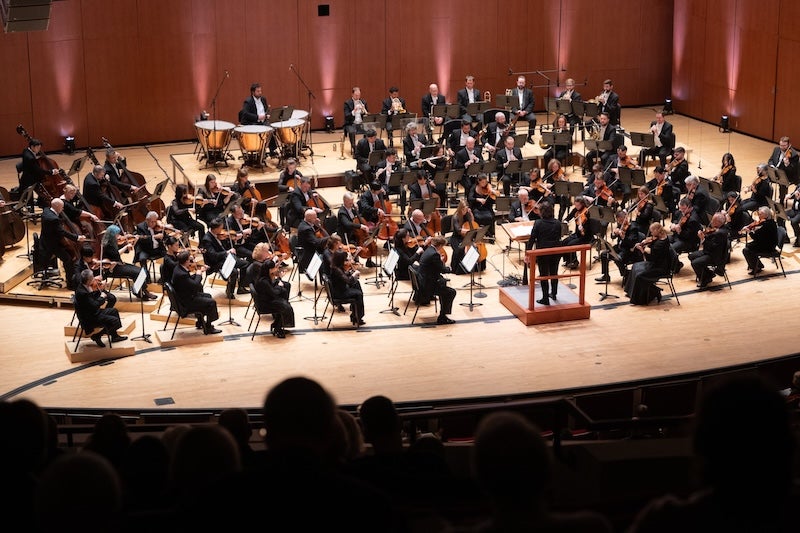
Photos by Rand Lines
NOV 21 | I’ve heard programming a concert is like composing a satisfying, multicourse meal. There are myriad routes to take for a filling, thrilling experience: conductors can present courses that play off each other, are vastly different, present a unified theme in different ways – the recipes are endless.
In his book “The Symphony,” Michael Steinberg, who spent decades writing program notes for the San Francisco Symphony and the Minnesota Orchestra, noted that when programming turns to Beethoven’s final symphony, “a performance of it can never be an ordinary event, just another concert.”
Thursday at Symphony Hall, music director Nathalie Stutzmann’s two-course menu fostered a wealth of connections – musically, biographically, emotionally. Placing Robert Schumann’s third symphony, completed in 1856, next to the first piano concerto by Johannes Brahms, premiered two years later, is a study in human connections. At 25, Brahms idolized Schumann, who saw rich talent in the younger musician; both Robert and Clara Schumann incorporated Brahms into their days, at least for a time. Unrequited love, or maybe just a profoundly missed connection, was also in the cards. The evening might well have been subtitled “the inner lives of composers.”
Composers don’t write in a vacuum. The real world is always present.
In the first half of the program, guest pianist Helene Grimaud showed how Brahms’ first piano concerto is a picture of a young composer who is perhaps working through complex feelings about Clara.
The piece opens not with the piano but with a muscular opening phrase in the strings, played passionately, with perhaps a bit of anger, by the ASO on Thursday. Pain at Robert’s death, love for Clara – what is in those notes? It’s impossible to say, but in the ASO’s hands, those notes took on a rich depth. (Hearing those notes, I could almost see Stutzmann, in rehearsals with the orchestra, singing the melodic line to display the depth of feeling she wanted to conjure.) Across the entire concerto, Stutzmann had the ensemble lean into extremity; thunderous passages gave way to rich, quiet phrases.
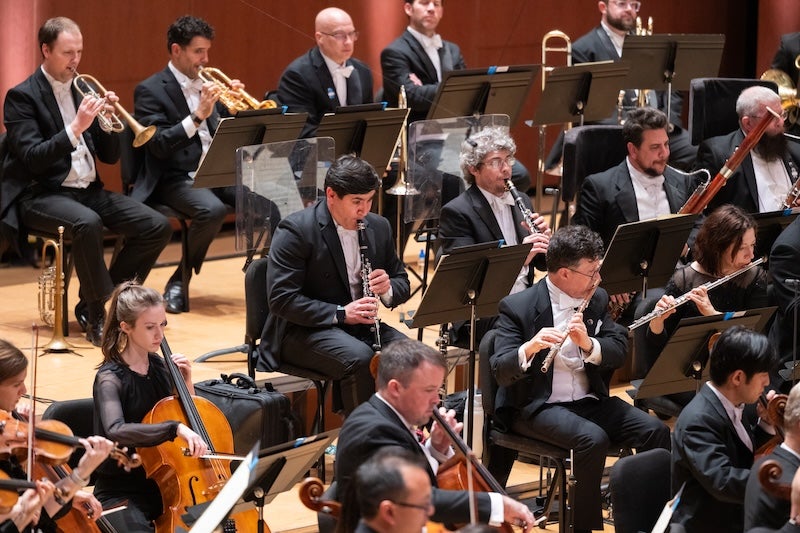
A world of music happened before Grimaud even played a note. Once introduced, her bright piano tone allowed each note to ring out clear and true, even when passing in a blur. The music is full of percussive, explosive pianism, and Grimaud is more than equal to the task. Symphony Hall audiences haven’t heard the concerto since 2019, when Robert Spano brought pianist Emmanuel Ax. That could be because it’s a piece that takes a certain level of technician, someone who can play incredibly intricate and complex parts movingly and beautifully. (One audience member, voice full of awe, said “the power in her fingers is amazing to watch.”)
Schumann’s third symphony, “Rhenish,” is unguarded happiness. Schumann wrote the work after securing a new gig, full of the possibilities a new occupation brings. The symphony is a view into a mind thrilled by a change in scenery, inspired by a new, fertile land, captivated by its charms. It’s a programmatic and fairly straightforward exaltation of his new station in life. The joy would be short-lived, of course, but the symphony stands as a picture in time, rich with optimism and fascination. Stutzmann had the orchestra humming with emotive, luxuriant playing, transmuting the passion for life at the music’s core to a rapt audience. The best playing of the night came in the fourth movement, “Feierlich,” when the mood turns more ceremonious, less pastoral, highlighting triumphant harmonies in the ASO trombones.
Why do audiences go to the symphony? What do they expect to hear, to learn, from old music, written a world away by white men? In the Brahms, it may speak to our current realities because you can still feel the young man processing his feelings on the page; in Schumann, you celebrate the joy in every note. Looking below the surface of this lovely music, these folks are thinking about, and battling with, age-old issues. But maybe, after a long week of being barraged by difficult-to-process news, it’s simply restorative to hear an optimistic, feel-good tune.